
How to Choose the Right Size Grease Trap for Your New South End Restaurant
Opening a restaurant in Charlotte’s South End district means navigating strict city regulations for commercial kitchen waste. The Charlotte Water FOG (Fats, Oils, and Grease) Program requires proper grease interceptor sizing to prevent sewer backups and protect the city’s wastewater infrastructure. Getting this wrong can mean costly fines, failed inspections, and operational delays that no restaurant owner wants. Charlotte Water FOG Program.
The right grease trap size depends on your kitchen’s fixture count, flow rate, and menu complexity. South End restaurants face unique challenges with older sewer lines and high-density development. This guide breaks down everything you need to know about grease trap sizing, installation requirements, and compliance with Charlotte Water regulations. Is a Tankless Water Heater Worth It for Your Ballantyne Home?.
Understanding Charlotte’s FOG Program Requirements
Charlotte Water mandates grease interceptors for all food service establishments that discharge wastewater containing FOG. The program aims to reduce blockages in the city’s sewer system and prevent environmental contamination. Restaurants in South End must comply with specific sizing requirements based on their kitchen fixture units. Signs You Need a Main Water Line Replacement in Pineville.
The sizing calculation starts with counting all fixtures that produce FOG-laden wastewater: sinks, dishwashers, pot fillers, and floor drains in food preparation areas. Each fixture has a fixture unit value that determines the total flow rate requirement. Charlotte Water uses the Uniform Plumbing Code (UPC) sizing method, which requires interceptors to handle peak flow rates without allowing grease to pass through. Uniform Plumbing Code sizing methods.
For South End’s older buildings, additional considerations apply. Many structures along the light rail corridor have limited space for outdoor installations, making indoor hydro-mechanical units more common. These compact units require specific clearances and ventilation systems to meet building code requirements. Common Sewer Line Issues for Historic Dilworth Properties and How to Fix Them.
Types of Grease Interceptors Available in Charlotte
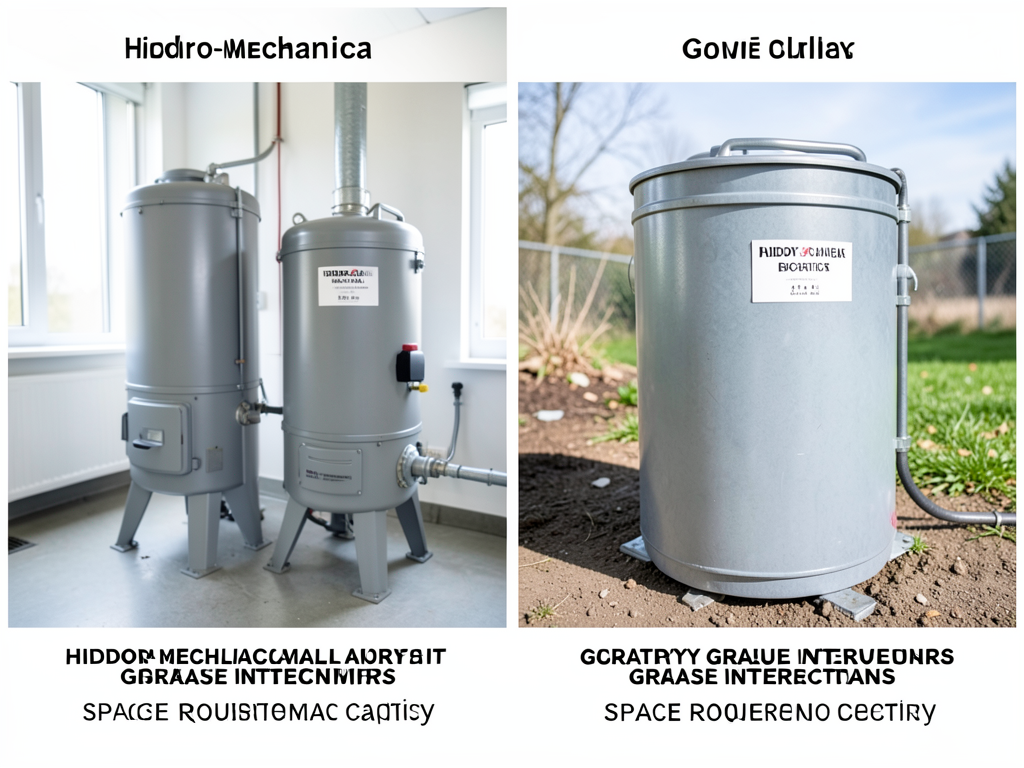
Two main categories exist for commercial grease traps: indoor hydro-mechanical grease interceptors (HGI) and outdoor gravity grease interceptors (GGI). Each serves different restaurant needs based on size, menu, and building constraints.
| Feature | Indoor HGI | Outdoor GGI |
|---|---|---|
| Typical Capacity | 20-100 gallons | 500-2000+ gallons |
| Installation Location | Under sinks or floor | Outside building |
| Maintenance Frequency | 30-90 days | 90-180 days |
| Cost Range | $2,000-$8,000 | $5,000-$15,000+ |
| Space Requirements | Minimal | Significant |
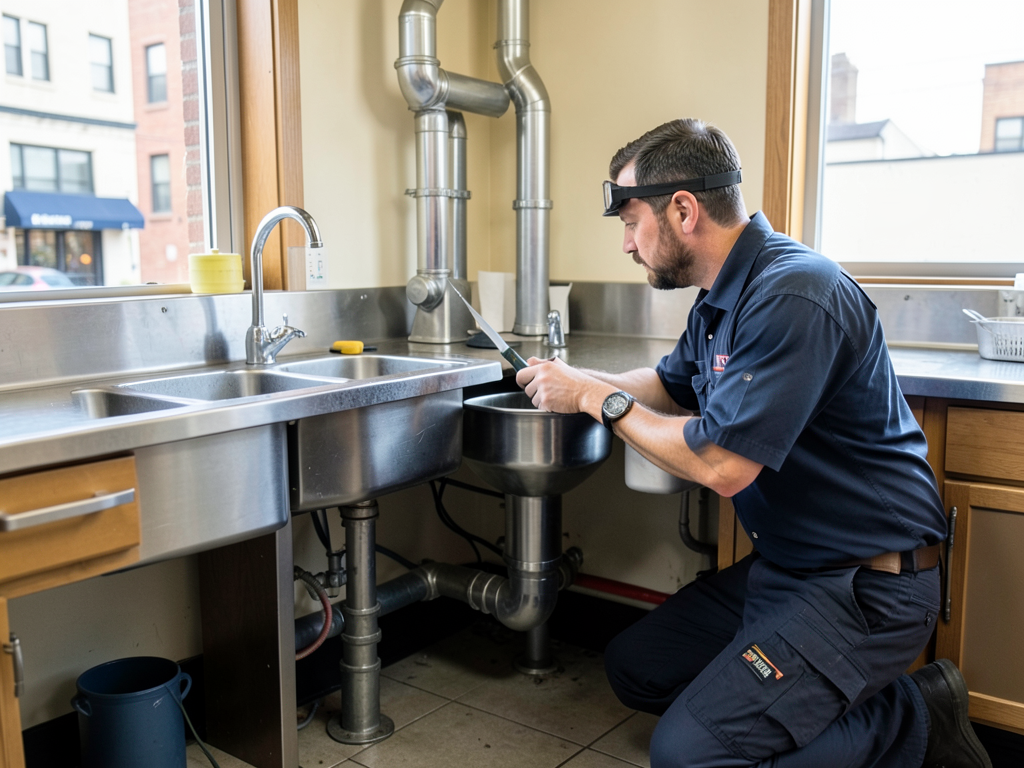
Indoor units work well for smaller South End establishments like cafes and sandwich shops. They install directly under sinks or in floor-mounted configurations, saving valuable kitchen space. Outdoor units handle high-volume restaurants, breweries, and food halls that produce substantial FOG waste. The larger capacity means less frequent pumping but requires excavation and exterior space.
Charlotte’s humid climate affects both types. Indoor units need proper ventilation to prevent moisture buildup and odor issues. Outdoor units require insulation in winter months to prevent freezing in exposed pipes, though South End rarely experiences prolonged freezing temperatures.
Calculating Your Restaurant’s Grease Trap Size
The sizing process starts with fixture count. Each sink, dishwasher, and drain has a specific flow rate measured in gallons per minute (GPM). Charlotte Water requires interceptors to handle peak flow without allowing grease to escape.
For a typical South End restaurant with multiple cooking stations, the calculation looks like this: three compartment sink (20 GPM) + pot sink (10 GPM) + dishwasher (15 GPM) = 45 GPM total. The interceptor must handle this flow rate plus a safety factor.
Charlotte Water requires a minimum 25% safety factor for commercial installations. Using our example, the required interceptor capacity would be 45 GPM × 1.25 = 56.25 GPM minimum. Most restaurants round up to the next standard size for safety and code compliance.
Menu type affects sizing too. Restaurants serving fried foods, sauces, or dairy products need larger interceptors than establishments focused on salads and sandwiches. The more FOG-producing items on your menu, the larger the interceptor required.
South End Specific Installation Considerations
South End’s development history creates unique challenges for grease trap installation. Many buildings date back to the early 2000s boom, with limited utility space and shared sewer connections. The area’s high water table near the light rail line can affect outdoor unit placement.
Older buildings along South Boulevard often have cast iron drain lines that require special adapters when connecting new grease interceptors. The clay soil common in Mecklenburg County expands and contracts with moisture changes, potentially affecting underground pipe connections over time.
Permit requirements in South End are strict. Charlotte Water requires detailed plumbing plans showing interceptor location, sizing calculations, and maintenance access. The Mecklenburg County Health Department also reviews plans for food safety compliance. Expect a 2-3 week review process before installation can begin. Plumbing Mint Hill.
Space constraints in South End’s dense development often dictate indoor installations. Restaurants in the Design Center or Atherton Mill areas may need custom-sized units to fit under existing counters while meeting flow rate requirements.
The Installation Process Step by Step
- Site Assessment
Plumbers evaluate existing plumbing, available space, and building codes. They measure fixture locations and calculate flow rates based on your kitchen layout.
- Permit Application
Submit plans to Charlotte Water and Mecklenburg County Health Department. Include detailed drawings showing interceptor location, pipe connections, and maintenance access.
- Installation Preparation
Shut off water supply, remove existing fixtures if needed, and prepare mounting surfaces. For outdoor units, excavate the installation area and prepare the base.
- Unit Installation
Position the interceptor according to manufacturer specifications. Connect inlet and outlet pipes, ensuring proper slope for drainage. Install vent connections and check valves as required.
- Testing and Inspection
Fill the system with water to check for leaks. Test all fixtures to verify proper flow. Schedule final inspection with Charlotte Water before covering any work.
The entire process typically takes 2-5 days depending on unit size and building conditions. Indoor installations often complete faster since they avoid excavation. Outdoor units may require additional time for concrete work and backfilling.
Charlotte Water conducts final inspections before you can operate. They verify proper sizing, installation, and compliance with local codes. Failed inspections require corrections before your restaurant can open, so schedule accordingly.
Maintenance Requirements to Stay Compliant
Regular maintenance prevents backups and keeps you compliant with Charlotte Water regulations. The frequency depends on your interceptor size and kitchen volume. Small indoor units need pumping every 30-60 days, while larger outdoor units might go 90-180 days between services.
Charlotte Water requires restaurants to maintain pumping manifests showing service dates and waste disposal. These records must be available for inspection at any time. Missing manifests can result in fines even if your interceptor functions properly.
Signs your grease trap needs service include slow drains, gurgling sounds in pipes, or foul odors from floor drains. Don’t wait for these symptoms. Schedule regular pumping based on your kitchen’s production volume.
South End restaurants often benefit from scheduled maintenance contracts. Local plumbing companies understand the area’s specific requirements and can coordinate with Charlotte Water inspections. They also know which pumping services are certified to handle restaurant waste in Mecklenburg County.. Read more about Certified Backflow Testing and Prevention Services for Businesses in Concord.
Common Mistakes to Avoid
Undersizing remains the most frequent error. Restaurant owners often underestimate their flow rates or skip the safety factor calculation. This leads to frequent backups and failed inspections.
Ignoring maintenance schedules causes problems too. Some owners think larger units need less frequent service. While true to an extent, all interceptors require regular pumping to function correctly.
DIY installations or using unlicensed contractors result in code violations. Charlotte Water only accepts installations from licensed master plumbers familiar with local requirements. Improper venting or pipe connections can cause system failures.
Using the wrong type of interceptor for your building creates issues. Indoor units in high-volume restaurants fill quickly. Outdoor units in buildings with limited exterior access become impractical.
Cost Factors Specific to Charlotte
Grease trap costs in South End reflect local labor rates and permit fees. Installation typically ranges from $2,000 for small indoor units to $15,000+ for large outdoor systems. These prices include basic piping connections but exclude any necessary structural modifications.
Permit fees from Charlotte Water average $200-500 depending on project scope. Health Department review adds another $100-300. Some buildings require engineering stamps on plans, adding $500-1,000 to your costs.
Maintenance contracts cost $75-150 per visit for small units, with larger systems running $200-400 per service. Annual contracts often provide better rates than one-time services.
Emergency service calls after hours or on weekends cost 1.5-2 times standard rates. Having a regular service provider reduces these expensive emergency calls.
Emergency Replacement Services
Failed grease traps create immediate problems. Backups can shut down your restaurant and create health hazards. South End’s dense development means problems affect neighboring businesses too.
Emergency replacement requires rapid response. Plumbers must assess the damage, source replacement units, and complete installation before health inspectors arrive. This often means working overnight or during off-hours.
Having a relationship with a local plumbing company helps during emergencies. They understand South End’s specific challenges and can mobilize quickly. Many keep common unit sizes in stock for rapid replacement.
Insurance may cover emergency replacements if caused by equipment failure rather than neglect. Document your maintenance history to support claims. Some policies offer business interruption coverage for extended closures.
Frequently Asked Questions
How long does it take to get a grease trap permit in Charlotte?
Permit review typically takes 2-3 weeks. Complex projects or those requiring Health Department review may take longer. Submit complete plans with all calculations to avoid delays.
Can I install a smaller grease trap to save money?
No. Charlotte Water requires interceptors sized to your specific flow rates plus safety factors. Undersized units violate code and can result in fines up to $1,000 per day.
What happens during a Charlotte Water inspection?
Inspectors verify proper sizing, installation, and maintenance records. They check for leaks, proper venting, and compliance with local codes. They may also test fixture flow rates to ensure the interceptor handles peak loads.
How do I know if my current grease trap is too small?
Signs include frequent backups, slow drains, or the need for weekly pumping. If your restaurant has expanded or changed menus, your current unit may no longer meet your needs.
Are there any South End-specific regulations I should know about?
Yes. Many South End buildings have shared utility connections requiring coordination with neighboring businesses. Some historic structures have additional preservation requirements affecting exterior modifications.
Choosing the right grease trap size protects your South End restaurant from costly fines and operational disruptions. Proper sizing ensures compliance with Charlotte Water regulations while keeping your kitchen running smoothly. The investment in correct installation and regular maintenance pays off through reliable operation and avoided penalties.
South End’s unique building characteristics and strict local codes make professional installation essential. Don’t risk your restaurant’s opening timeline with DIY approaches or unlicensed contractors. Work with experienced Charlotte plumbers who understand local requirements and can guide you through the permitting process. Professional Toilet Repair and Installation Services in Matthews.
Ready to ensure your restaurant meets all grease trap requirements? Call (980) 342-9933 today to schedule your professional assessment and get your kitchen code-compliant before your grand opening. Our Charlotte-based team specializes in South End restaurant installations and understands exactly what local inspectors look for.
{
“@context”: “https://schema.org”,
“@type”: “BlogPosting”,
“headline”: “How to Choose the Right Size Grease Trap for Your New South End Restaurant”,
“description”: “Learn how to size your grease trap correctly for South End restaurant compliance. Avoid fines and backups with Charlotte Water’s FOG program requirements.”,
“wordCount”: 1868,
“datePublished”: “2026-03-16T11:33:00.000Z”,
“dateModified”: “2026-03-16T11:33:00.000Z”,
“inLanguage”: “en-US”,
“mainEntityOfPage”: {
“@type”: “WebPage”,
“@id”: “https://keystoneplumbingcharlotte.com”
},
“publisher”: {
“@type”: “LocalBusiness”,
“name”: “Keystone Plumbing Charlotte”,
“url”: “https://keystoneplumbingcharlotte.com”
},
“author”: {
“@type”: “Organization”,
“name”: “Keystone Plumbing Charlotte”,
“url”: “https://keystoneplumbingcharlotte.com”
},
“image”: {
“@type”: “ImageObject”,
“url”: “https://keystoneplumbingcharlotte.com/wp-content/uploads/2026/03/how-to-choose-the-right-size-grease-trap-for-your-1.png”
}
}
{
“@context”: “https://schema.org”,
“@type”: “Plumber”,
“name”: “Keystone Plumbing Charlotte”,
“url”: “https://keystoneplumbingcharlotte.com”,
“address”: {
“@type”: “PostalAddress”,
“addressLocality”: “Charlotte”
},
“areaServed”: {
“@type”: “City”,
“name”: “Charlotte”
}
}
{
“@context”: “https://schema.org”,
“@type”: “FAQPage”,
“mainEntity”: [
{
“@type”: “Question”,
“name”: “How long does it take to get a grease trap permit in Charlotte?”,
“acceptedAnswer”: {
“@type”: “Answer”,
“text”: “Permit review typically takes 2-3 weeks. Complex projects or those requiring Health Department review may take longer. Submit complete plans with all calculations to avoid delays.”
}
},
{
“@type”: “Question”,
“name”: “Can I install a smaller grease trap to save money?”,
“acceptedAnswer”: {
“@type”: “Answer”,
“text”: “No. Charlotte Water requires interceptors sized to your specific flow rates plus safety factors. Undersized units violate code and can result in fines up to $1,000 per day.”
}
},
{
“@type”: “Question”,
“name”: “What happens during a Charlotte Water inspection?”,
“acceptedAnswer”: {
“@type”: “Answer”,
“text”: “Inspectors verify proper sizing, installation, and maintenance records. They check for leaks, proper venting, and compliance with local codes. They may also test fixture flow rates to ensure the interceptor handles peak loads.”
}
},
{
“@type”: “Question”,
“name”: “How do I know if my current grease trap is too small?”,
“acceptedAnswer”: {
“@type”: “Answer”,
“text”: “Signs include frequent backups, slow drains, or the need for weekly pumping. If your restaurant has expanded or changed menus, your current unit may no longer meet your needs.”
}
},
{
“@type”: “Question”,
“name”: “Are there any South End-specific regulations I should know about?”,
“acceptedAnswer”: {
“@type”: “Answer”,
“text”: “Yes. Many South End buildings have shared utility connections requiring coordination with neighboring businesses. Some historic structures have additional preservation requirements affecting exterior modifications.”
}
}
]
}
{
“@context”: “https://schema.org”,
“@type”: “HowTo”,
“name”: “How to Install a Grease Trap”,
“step”: [
{
“@type”: “HowToStep”,
“position”: 1,
“name”: “Site Assessment”,
“text”: “Plumbers evaluate existing plumbing, available space, and building codes. They measure fixture locations and calculate flow rates based on your kitchen layout.”
},
{
“@type”: “HowToStep”,
“position”: 2,
“name”: “Permit Application”,
“text”: “Submit plans to Charlotte Water and Mecklenburg County Health Department. Include detailed drawings showing interceptor location, pipe connections, and maintenance access.”
},
{
“@type”: “HowToStep”,
“position”: 3,
“name”: “Installation Preparation”,
“text”: “Shut off water supply, remove existing fixtures if needed, and prepare mounting surfaces. For outdoor units, excavate the installation area and prepare the base.”
},
{
“@type”: “HowToStep”,
“position”: 4,
“name”: “Unit Installation”,
“text”: “Position the interceptor according to manufacturer specifications. Connect inlet and outlet pipes, ensuring proper slope for drainage. Install vent connections and check valves as required.”
},
{
“@type”: “HowToStep”,
“position”: 5,
“name”: “Testing and Inspection”,
“text”: “Fill the system with water to check for leaks. Test all fixtures to verify proper flow. Schedule final inspection with Charlotte Water before covering any work.”
}
],
“image”: “https://keystoneplumbingcharlotte.com/wp-content/uploads/2026/03/how-to-choose-the-right-size-grease-trap-for-your-1.png”
}
{
“@context”: “https://schema.org”,
“@type”: “BreadcrumbList”,
“itemListElement”: [
{
“@type”: “ListItem”,
“position”: 1,
“name”: “Home”,
“item”: “https://keystoneplumbingcharlotte.com”
},
{
“@type”: “ListItem”,
“position”: 2,
“name”: “Blog”,
“item”: “https://keystoneplumbingcharlotte.com/blog”
},
{
“@type”: “ListItem”,
“position”: 3,
“name”: “How to Choose the Right Size Grease Trap for Your New South End Restaurant”
}
]
}
{
“@context”: “https://schema.org”,
“@type”: “Service”,
“serviceType”: “Plumbing”,
“provider”: {
“@type”: “LocalBusiness”,
“name”: “Keystone Plumbing Charlotte”,
“url”: “https://keystoneplumbingcharlotte.com”
},
“areaServed”: {
“@type”: “City”,
“name”: “Charlotte”
},
“description”: “Learn how to size your grease trap correctly for South End restaurant compliance. Avoid fines and backups with Charlotte Water’s FOG program requirements.”
}