Menu

Medical & Dental Gas Plumbing in Charlotte | Zero-Downtime Installation for Healthcare Facilities

Certified medical gas pipeline services engineered for continuous operations across Charlotte hospitals, surgical centers, and dental practices with full NFPA 99 compliance and scheduled installation windows that protect patient care continuity.

Slider Image 1
Slider Image 2
Slider Image 3
Slider Image 4
Slider Image 5
Slider Image 7
Slider Image 8
Slider Image 9
Slider Image 10
Slider Image 11

Healthcare Facility Operations Depend on Medical Gas System Integrity

Your facility cannot afford a medical gas system failure. When oxygen delivery lines fail or nitrous oxide piping develops leaks, patient safety becomes compromised and your practice faces immediate regulatory scrutiny.

Charlotte's rapid healthcare expansion has created unique infrastructure challenges. New surgical centers and dental practices are opening across Ballantyne, SouthPark, and the University City corridor. Many facilities inherited aging med gas installation services from previous tenants or discovered that contractors lacked proper certification during buildout. The result is non-compliant systems that fail joint commission inspections.

Medical gas piping systems require specialized knowledge that standard commercial plumbers do not possess. These systems operate under strict pressure tolerances. Oxygen lines demand oil-free brazing techniques to prevent combustion risks. Nitrous oxide requires specific ventilation protocols. Medical air systems need dedicated compressors with medical-grade filtration. Vacuum systems must maintain negative pressure without cross-contamination.

North Carolina building codes mandate ASTER certification for anyone installing or modifying medical gas pipeline services. The work requires pressure testing, documentation, and third-party verification before activation. Facilities that cut corners face state health department violations, operational shutdowns, and liability exposure.

Dental gas piping presents additional complexity. Dental offices require multiple gas types at each operatory. The manifold systems, zone valves, and alarm panels must integrate seamlessly. A poorly designed system creates workflow bottlenecks that reduce patient throughput and revenue.

Your facility needs certified med gas plumbers who understand both the technical requirements and the operational realities of healthcare environments. The system must function flawlessly from day one.

Healthcare Facility Operations Depend on Medical Gas System Integrity
Engineered Medical Gas Systems Built for Reliability

Engineered Medical Gas Systems Built for Reliability

Medical gas installation requires engineering precision that eliminates guesswork. We begin every project with load calculations based on your exact equipment specifications and simultaneous use factors. A six-operatory dental practice has different demand profiles than a surgical center with three ORs. The piping diameter, pressure regulation, and reserve capacity must match your operational model.

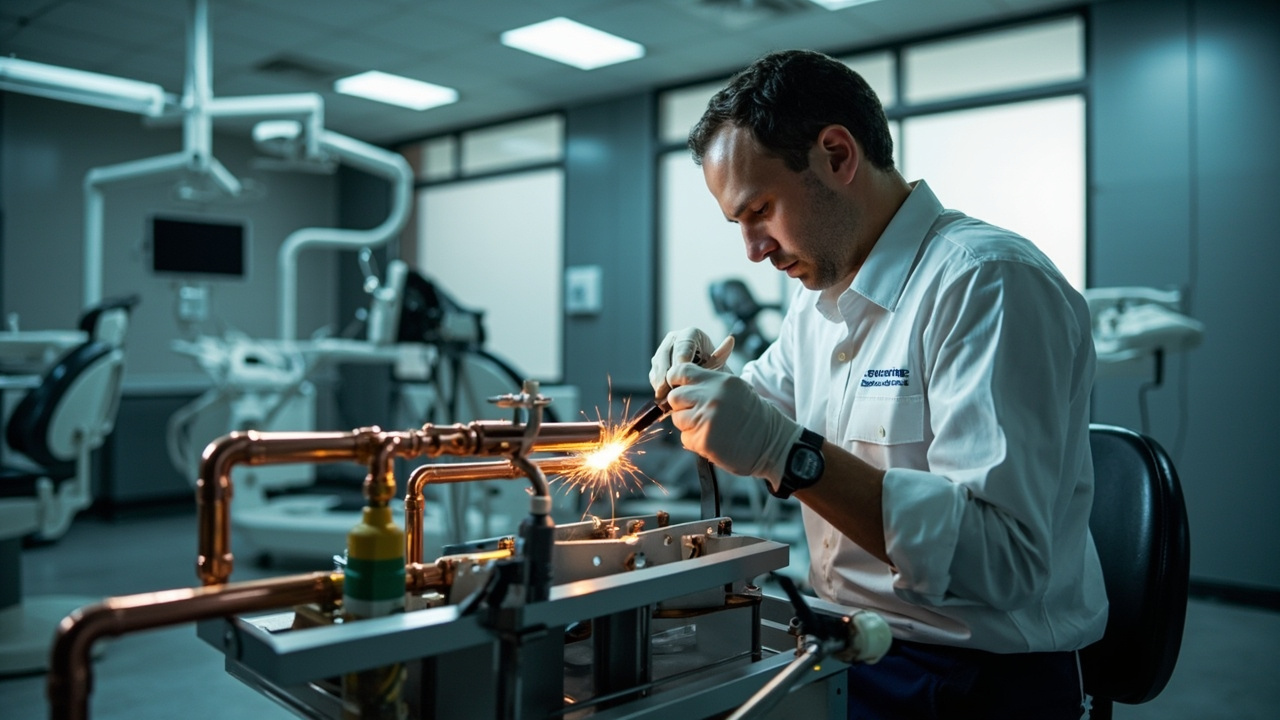
Our approach uses medical-grade copper tubing with silver-brazed joints. We purge all oxygen lines with nitrogen during brazing to prevent interior oxidation that creates particulate contamination. Each joint receives visual inspection and pressure testing at 150 percent of working pressure. We document every test with timestamped readings that satisfy regulatory audits.

Zone valve boxes install at strategic locations to allow isolation during maintenance without facility-wide shutdowns. Master alarm panels integrate with your building management system to provide real-time monitoring of pressure levels, reserve tank status, and system faults. We configure alarm contacts to trigger your specific notification protocols.

For dental gas piping, we design manifold rooms with adequate ventilation and separation distances between gas types. Nitrous oxide requires scavenging systems that exhaust to exterior locations. We route waste gas lines with continuous fall to prevent liquid accumulation. Each operatory receives clearly labeled outlets with DISS-specific connections that prevent cross-connection errors.

The final verification process includes third-party testing by an approved agency. They conduct pressure decay tests, cross-connection tests, and purity analysis on oxygen and medical air systems. You receive a comprehensive test report and as-built drawings that document your system exactly as installed. These documents become part of your facility's permanent compliance records.

We coordinate installation around your operational schedule. Tie-ins to existing systems happen during planned downtime windows that you control.

How Medical Gas Installation Proceeds from Design to Activation

Medical & Dental Gas Plumbing in Charlotte | Zero-Downtime Installation for Healthcare Facilities
01

System Design and Engineering

We survey your facility to document equipment locations, gas requirements, and structural conditions. Our engineers calculate pressure drops across the entire distribution network and size piping to maintain delivery pressure at every outlet. You receive detailed drawings showing pipe routes, valve locations, and equipment specifications. We submit these plans for permit approval and coordinate any required modifications before material procurement begins.
02

Controlled Installation Process

Installation teams work in designated areas using contamination control procedures. We install piping supports per seismic requirements and maintain proper clearances from electrical systems. All penetrations through fire-rated assemblies receive approved firestop systems. Brazing operations use inert gas purging to protect interior surfaces. Each completed section receives cleaning and pressure testing before connection to the main distribution system. Documentation logs track every joint and test result.
03

Verification and System Commissioning

Third-party testing agencies conduct comprehensive system verification. Pressure tests run for minimum duration periods while we monitor for any decay. Cross-connection tests confirm outlet identity matches labeled gas type. Purity tests on oxygen and medical air verify compliance with USP standards. After successful verification, we provide training on valve locations, alarm panel operation, and emergency shutdown procedures. Your facility receives complete documentation packages for regulatory submissions.

Charlotte Healthcare Facilities Require Local Medical Gas Expertise

Medical gas systems failures create cascading problems that extend beyond immediate patient care disruptions. Regulatory agencies scrutinize your compliance documentation. Accreditation bodies question your facility management practices. Your liability exposure increases with every hour of non-compliance.

Keystone Plumbing Charlotte maintains the specific certifications that medical gas work demands. Our technicians hold current ASTER med gas installer certification. We maintain relationships with approved testing agencies that can schedule verification without delays. Our permit history with Mecklenburg County building officials demonstrates consistent code compliance across dozens of healthcare projects.

Charlotte's healthcare sector has specific characteristics that affect system design. Atrium Health facilities, Novant surgical centers, and independent practices each have different operational requirements. We have installed systems in multi-tenant medical buildings along Randolph Road, standalone dental offices in Myers Park, and ambulatory surgery centers in Ballantyne. This experience base allows us to anticipate site-specific challenges before they become schedule delays.

The local supply chain matters for medical gas projects. We stock medical-grade copper, silver brazing alloys, and DISS-specific outlets. Our supplier relationships ensure that specialty components arrive on schedule. When a manifold assembly requires custom configuration or an alarm panel needs specific integration features, we have the local resources to execute without shipping delays.

Medical gas pipeline services require ongoing maintenance relationships. Alarm panel testing, pressure relief valve inspection, and reserve system verification must happen on defined schedules. We provide facilities with maintenance agreements that satisfy joint commission requirements. You receive documented service records that demonstrate continuous compliance.

Your facility needs a contractor who understands that medical gas systems are life safety infrastructure. We approach every project with that operational reality in focus.

What Your Facility Can Expect from Medical Gas Installation

Project Timeline and Coordination

Medical gas projects require careful scheduling that respects your operational constraints. Design and permitting typically require three to four weeks depending on system complexity and jurisdiction review times. Installation duration depends on facility size and scope of work. A six-operatory dental office usually requires one to two weeks for complete installation. Multi-floor surgical centers may require four to six weeks. We develop detailed schedules that identify when specific areas will be affected. Tie-ins to existing systems happen during planned shutdown windows that you approve in advance. Third-party verification adds approximately one week after installation completion. We provide weekly progress updates and immediately communicate any conditions that might affect the schedule.

Comprehensive System Documentation

Regulatory compliance requires extensive documentation that many contractors fail to provide adequately. You receive as-built drawings showing actual pipe routes, valve locations, and outlet positions. These drawings include elevation views that document vertical distribution and penetration details. Pressure test reports document hold times, initial pressures, and final readings for each zone. Purity test results provide laboratory analysis of oxygen and medical air quality. Cross-connection test records confirm outlet identity. Material certifications prove that all components meet medical gas specifications. Brazing operator qualifications demonstrate that installers hold current certifications. We compile these documents into organized packages that satisfy inspectors and accreditation surveyors. Digital copies integrate into your facility management systems for long-term access.

System Performance and Reliability

Medical gas systems must deliver consistent performance under all demand conditions. Properly sized distribution networks maintain delivery pressure even during peak simultaneous use. Zone valve configurations allow maintenance on individual branches without affecting other areas. Alarm systems provide early warning of pressure variations, reserve depletion, or system faults. The master alarm panel displays real-time status and maintains event logs that document system performance. Manifold rooms receive adequate ventilation that prevents heat buildup and ensures safe working conditions during cylinder changeouts. All components install with appropriate seismic restraint that meets California OSP standards adopted by North Carolina. Your system operates reliably from activation day forward without the performance degradation that indicates poor installation quality.

Ongoing Maintenance and Support

Medical gas systems require preventive maintenance that goes beyond standard plumbing service. Alarm panels need quarterly testing to verify proper function of all sensors and notification devices. Pressure relief valves require annual inspection and testing. Reserve systems need capacity verification and automatic switchover testing. Zone valves must operate smoothly without binding or leakage. We provide maintenance agreements structured around joint commission requirements and manufacturer recommendations. Service visits include documentation that becomes part of your compliance records. Emergency response for system failures receives priority dispatch because we understand the operational impact. Our technicians carry common repair parts and have access to specialty components through local suppliers. You receive a single point of contact who understands your facility's specific system configuration and operational requirements.

Frequently Asked Questions

You Have Questions,
We Have Answers

What is medical gas plumbing? +

Medical gas plumbing delivers specialized gases like oxygen, nitrous oxide, and medical air to patient care areas in hospitals, surgical centers, and dental offices. These systems operate under strict regulatory standards, including NFPA 99 and local Charlotte building codes. The piping, valves, and connections must meet medical-grade specifications to prevent contamination. Installation requires certified technicians who understand pressure requirements, zone valve placement, and alarm system integration. For Charlotte healthcare facilities, proper medical gas infrastructure is non-negotiable for operational continuity and patient safety.

How much does it cost to plumb a gas line? +

Gas line installation costs depend on project scope, material specifications, and regulatory compliance requirements. Medical gas systems cost significantly more than residential natural gas lines due to specialized copper tubing, pressure testing, and certification protocols. Commercial projects in Charlotte require permit fees, inspection schedules, and documentation aligned with North Carolina state codes. Distance from the gas source, number of outlets, and required pressure levels all impact final costs. Contact a licensed contractor for project-specific estimates based on your facility's needs and existing infrastructure.

What type of pipe is used for medical gas? +

Medical gas systems use Type K or Type L copper tubing, which meets stringent purity and pressure standards. Unlike standard plumbing copper, medical gas pipe undergoes degreasing and cleaning to eliminate contaminants that could compromise patient safety. All joints use brazed connections with silver-bearing alloys, never soldered. Charlotte healthcare facilities must follow NFPA 99 specifications for pipe sizing, material certification, and installation methods. Stainless steel is acceptable in certain applications, but copper remains the industry standard for oxygen, nitrous oxide, and medical air distribution.

What is gas plumbing called? +

Gas plumbing is commonly called gas fitting or gas piping. Professionals who install these systems are gas fitters or certified gas technicians. In medical environments, the work falls under medical gas installation, a specialized subset requiring additional certifications beyond standard plumbing licenses. Charlotte commercial projects often involve coordination between gas fitters, mechanical contractors, and fire safety inspectors to ensure compliance with state and federal regulations. The terminology varies by trade scope, but the core function remains: safe, code-compliant gas distribution.

What qualifications do you need to work with gas? +

Medical gas installers must hold specialized certifications beyond standard plumbing licenses. ASSE 6010 certification (formerly NITC) is required for professionals working on medical gas systems. North Carolina also requires a state plumbing license and gas fitting endorsement. Charlotte healthcare projects demand technicians who understand NFPA 99 protocols, brazing techniques, pressure testing procedures, and documentation requirements. Ongoing education ensures compliance with evolving codes. Facilities should verify contractor credentials before project initiation to avoid liability and ensure system integrity.

What is a gas plumber called? +

A gas plumber is called a gas fitter, gas technician, or gasfitter. In medical settings, they are medical gas installers or medical gas technicians. These professionals hold specific certifications for handling combustible and medical-grade gases. Charlotte commercial projects require contractors with both state licensure and industry certifications like ASSE 6010. The title varies regionally, but the skill set remains consistent: expertise in pressure systems, code compliance, and safe installation practices. Always verify credentials when hiring for healthcare facility work.

Are gas lines covered by home insurance? +

Homeowners insurance typically does not cover gas line installation or upgrades. Most policies exclude routine maintenance, code compliance improvements, and infrastructure enhancements. Damage from covered perils like fire or storm impact may trigger coverage for repair costs. Commercial property insurance for Charlotte healthcare facilities often includes equipment breakdown coverage, which may extend to gas systems under specific conditions. Review your policy exclusions and consult your insurer before assuming coverage. Liability for improper installation or code violations falls on the property owner, not the insurer.

Can I install a gas line myself? +

No. Gas line installation requires state licensure and specialized training. North Carolina law prohibits unlicensed individuals from installing, modifying, or repairing gas systems. Medical gas work demands ASSE 6010 certification and adherence to NFPA 99 standards. Improper installation creates catastrophic risks: leaks, fires, patient harm, and regulatory violations. Charlotte facilities face steep fines and operational shutdowns for non-compliant work. Liability exposure alone makes DIY gas work untenable. Always hire certified, insured contractors for gas system projects to protect your business and occupants.

Why is gas installation so expensive? +

Gas installation costs reflect regulatory complexity, material specifications, and liability exposure. Medical gas systems require certified technicians, specialized copper tubing, pressure testing, and documentation that standard plumbing does not. Charlotte projects involve permit fees, multiple inspections, and coordination with fire marshals and health department officials. Brazing techniques, leak testing protocols, and alarm system integration add labor hours. The cost ensures code compliance, patient safety, and operational reliability. Cutting corners on medical gas work invites catastrophic failures, legal liability, and facility shutdowns.

What is considered a medical gas? +

Medical gases include oxygen, nitrous oxide, medical air, nitrogen, and carbon dioxide used in patient care. Oxygen supports respiration and anesthesia delivery. Nitrous oxide provides sedation in dental and surgical settings. Medical air powers ventilators and surgical tools. Nitrogen drives certain equipment, while carbon dioxide is used in minimally invasive procedures. Charlotte healthcare facilities must maintain these gases under strict purity and pressure standards per NFPA 99. Each gas requires dedicated piping, color-coded outlets, and alarm monitoring to prevent cross-contamination and ensure patient safety.

How Charlotte's Healthcare Growth Affects Medical Gas Infrastructure

Charlotte's position as a major healthcare hub creates specific infrastructure demands that affect medical gas systems. The concentration of teaching hospitals, specialty surgical centers, and dental practices across the metro area means that experienced med gas contractors stay busy with ongoing projects. New facilities opening in University City and Ballantyne often face tight construction schedules that compress medical gas installation windows. Existing buildings being converted to healthcare use frequently have structural limitations that complicate pipe routing and require creative engineering solutions. The competitive healthcare market means facilities cannot afford extended downtime for system installations or repairs. These local conditions require contractors who can mobilize quickly, work efficiently within operational constraints, and deliver systems that pass inspection on the first attempt.

Mecklenburg County building officials have specific expectations for medical gas permit applications and inspection protocols. They require detailed submittal packages that include engineered drawings, equipment specifications, and installer certifications. Inspections verify brazing techniques, pressure test procedures, and documentation completeness. Contractors without established local relationships often experience permit delays and failed inspections that extend project timelines. Our history of successful medical gas projects across Charlotte facilities has established the working relationships that keep projects moving. Building officials recognize our commitment to code compliance and documentation quality. This local credibility translates directly into smoother permit processes and faster final approvals for your facility.
Plumbing Services in The Charlotte Area

Discover our service area and see how conveniently located Keystone Plumbing is to serve your residential and commercial needs. We are dedicated to bringing reliable, expert plumbing solutions right to your doorstep. Explore the map to visualize our reach and understand why we are the trusted local choice for all your plumbing requirements. We look forward to connecting with you and providing exceptional service wherever you are located within our service boundaries.

Address:
Keystone Plumbing Charlotte, 2015 Ayrsley Town Blvd #202, Charlotte, NC, 28273

Additional Services We Offer

Our news updates

Latest Articles & News from The Blogs

Why Your South Park Home Needs a Point of Use Water Filter for Better Tasting Coffee \n\n Your morning coffee…

Why Your South Park Home Needs a Point of Use Water Filter for Better Tasting Coffee

Why Your South Park Home Needs a Point of Use Water Filter for Better Tasting Coffee \n\n Your morning coffee…

Choosing Between Wall-Hung and Standard Toilets for Your Modern South End Condo

Wall-Hung vs Standard Toilets: What Works Best for Your South End Condo? Choosing the right toilet for your modern South…

How to Stop the Cold Water Sandwich Effect With Your Tankless System in Ballantyne

How to Stop the Cold Water Sandwich Effect With Your Tankless System in Ballantyne If you live in Ballantyne and…

Contact Us

Your patients depend on reliable medical gas infrastructure. Contact Keystone Plumbing Charlotte at (980) 342-9933 to schedule a consultation. We will assess your facility requirements and provide a detailed proposal that addresses your specific operational needs and compliance obligations.