
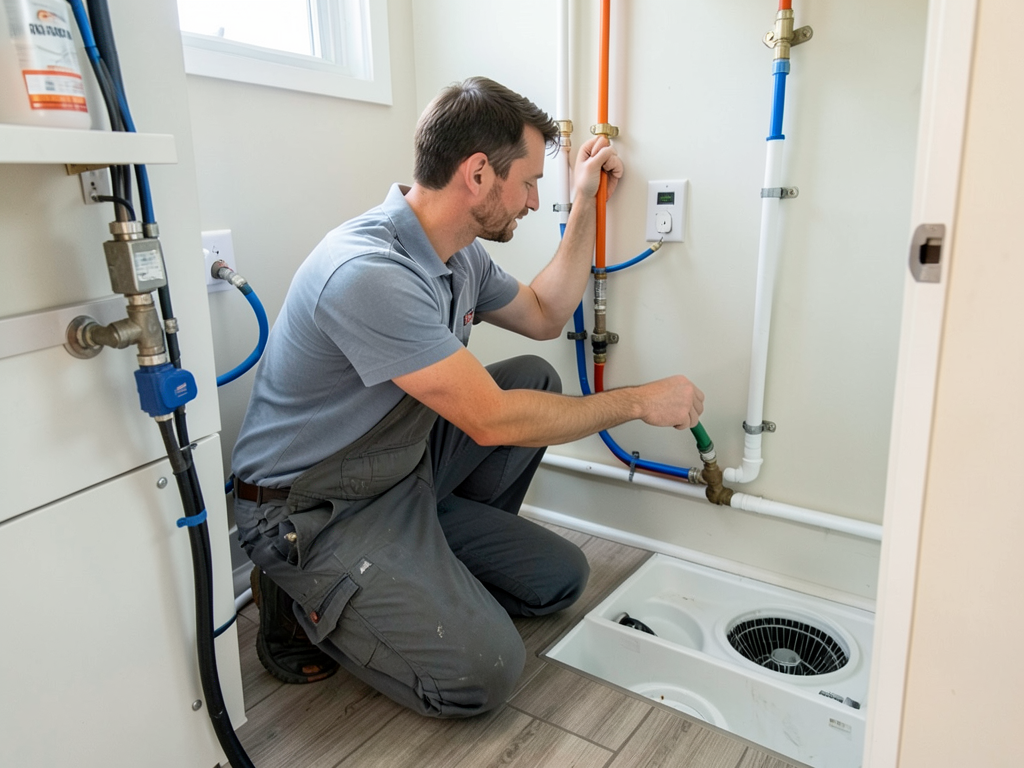
Moving your laundry room to the second floor (What every Dilworth homeowner should know)
Moving a laundry room from the basement or main floor to the second floor in your Dilworth home is a popular renovation that adds convenience and can increase your home’s value. But this upgrade comes with specific plumbing challenges that many homeowners overlook. The historic bungalows and craftsman homes in Dilworth were built with laundry in the basement or mudroom, not on the second floor. This means you’ll need to extend water lines, create proper drainage, and ensure your home can handle the vibration and weight of a washing machine upstairs. Is a Tankless Water Heater Worth It for Your Ballantyne Home?.
The good news is that with proper planning and code-compliant installation, an upstairs laundry room is entirely possible. You’ll need to consider structural reinforcement, proper venting, and moisture protection systems that are often not required for first-floor installations. This guide covers everything Dilworth homeowners need to know about making this upgrade safely and legally.
Why Charlotte homeowners are moving laundry rooms upstairs
Second-floor laundry rooms have become increasingly popular in Charlotte’s older neighborhoods, especially in Dilworth, Myers Park, and Elizabeth. The main driver is convenience. Having laundry near bedrooms means you can toss dirty clothes directly into the washer without carrying heavy loads up and down stairs. This is particularly valuable for families with young children or elderly residents who find stairs challenging.. Read more about Installing a utility sink in your Charlotte garage or laundry room.
Beyond convenience, an upstairs laundry room can actually increase your home’s resale value. Many modern homebuyers expect this feature, especially in homes over 2,000 square feet. In the Charlotte market, homes with second-floor laundry often sell faster and at a premium compared to similar homes without this feature. The lifestyle upgrade appeals to busy professionals and families who value time-saving features. Professional Toilet Repair and Installation Services in Matthews.
Another factor is the age of plumbing systems in Dilworth’s historic homes. Many properties still have original galvanized pipes that are nearing the end of their lifespan. Moving the laundry room provides an opportunity to upgrade to modern PEX or copper piping throughout the house, improving water pressure and reducing the risk of future leaks. Signs You Need a Main Water Line Replacement in Pineville.
The technical requirements: plumbing, drainage, and venting
Installing a laundry room on the second floor requires careful attention to plumbing codes and technical specifications. The North Carolina Plumbing Code requires a minimum 2-inch drain line for washing machine discharge, which must have a proper P-trap and vent connection. In older Dilworth homes, you’ll likely need to tie into the existing main stack or create a new vent through the roof. North Carolina Plumbing Code requirements.
Drainage slope is critical for preventing clogs and backups. The International Residential Code (IRC) mandates a minimum slope of 1/4 inch per foot for horizontal drain lines. For a second-floor installation, this means your drain pipe must maintain this slope all the way to the main stack or sewer line. In some cases, this requires creative routing through walls or ceilings to achieve the proper grade. Common Sewer Line Issues for Historic Dilworth Properties and How to Fix Them.
Hot and cold water supply lines must be sized correctly to handle the washing machine’s flow rate. Most washers require 1/2-inch supply lines with individual shut-off valves. You’ll also need to install a water hammer arrestor to prevent the banging pipes that occur when the washer’s valves close rapidly. This small device absorbs the shock wave and protects your plumbing system from damage. Plumbing Mint Hill.
Ventilation is another crucial consideration. Washing machines need proper air flow to drain efficiently. You can either tie into the existing vent stack (which may require cutting into walls to access) or install an air admittance valve (AAV). While AAVs are permitted in North Carolina, they must be installed within 6 feet of the trap and in an accessible location for maintenance.
Charlotte building codes and Mecklenburg County permits
Any plumbing alteration that changes the location of fixtures requires a permit from Mecklenburg County Land Use and Environmental Services Agency (LUESA). This includes moving a laundry room to the second floor. The permit process ensures your installation meets the North Carolina Plumbing Code and passes inspection before walls are closed up. Mecklenburg County Land Use and Environmental Services Agency.
The permit application requires detailed plumbing plans showing the location of new fixtures, drain lines, vents, and water supply lines. You’ll need to submit these plans to LUESA for review, which typically takes 3-5 business days. Once approved, you can purchase your permit and schedule inspections at key stages of the project.. Read more about What to do if your neighbor’s plumbing leak is damaging your Uptown condo.
Inspections are required at three stages: before covering any rough-in plumbing, before installing fixtures, and for the final inspection after completion. Skipping permits or inspections can result in fines and may create problems when you sell your home. Many buyers and their inspectors will ask for documentation of permits for major renovations.
Insurance companies also require permits for certain types of work. If you have a water damage claim related to unpermitted plumbing work, your insurance company might deny coverage. The small investment in permits provides protection and ensures your work meets current safety standards.
Preventing water damage: the ‘must-haves’ for second floor units
Water damage is the biggest risk when installing a laundry room on the second floor. Unlike first-floor installations where leaks drain to the basement or crawlspace, second-floor leaks can damage ceilings, walls, and flooring below. This makes moisture protection systems essential for upstairs laundry rooms.
Every second-floor laundry installation should include a drain pan under the washing machine. This pan must be at least 1.5 inches deep and sized to extend at least 1 inch beyond the washer on all sides. The pan needs a drain connection to the main drain system so that if the washer leaks, water goes down the drain instead of onto your floor.
Automatic shut-off valves are another critical safety feature. These devices detect leaks and immediately cut off both hot and cold water supply lines. Some models include moisture sensors that can detect even small leaks and sound an alarm. While they add to the upfront cost, they can prevent thousands of dollars in water damage.
Floor reinforcement is necessary to handle the weight and vibration of a washing machine. A typical washer plus water can weigh over 200 pounds, and the spin cycle creates significant vibration. You may need to add blocking between joists or install a reinforced subfloor to prevent movement that could damage pipes or cause leaks.
Consider installing a floor drain in the laundry room as an extra precaution. While not required by code in all cases, a floor drain provides an additional layer of protection against water damage. It should be connected to the main drain system and covered with a strainer to prevent debris from clogging it.
Estimated cost breakdown for Charlotte residents
The cost to move a laundry room to the second floor varies significantly based on your home’s existing plumbing configuration and the complexity of the installation. In Charlotte’s older neighborhoods, expect to pay more due to the challenges of working with historic homes and the need to preserve original features.
Plumbing labor typically ranges from $75 to $150 per hour in the Charlotte area, with most laundry room relocations requiring 20-30 hours of work. This includes running new supply lines, creating proper drainage, installing vents, and connecting to the main plumbing system. Complex installations in historic homes may require additional time for careful routing around existing structures.
Materials costs vary based on your choices. PEX piping is generally less expensive than copper, with PEX supply lines costing around $0.50 to $1.00 per foot compared to $2.00 to $4.00 per foot for copper. However, some homeowners prefer copper for its durability and traditional appearance in historic homes.
Permit fees from Mecklenburg County typically range from $100 to $300 depending on the scope of work. This includes the initial permit and inspection fees. You may also need to pay for additional inspections if issues are found during the rough-in or final inspection phases.
Additional costs to consider include floor reinforcement ($200 to $500), drain pan installation ($100 to $200), automatic shut-off valves ($150 to $300), and any necessary electrical upgrades. The total project cost for a basic second-floor laundry installation in a Charlotte home typically ranges from $3,000 to $7,000, with complex historic home installations potentially reaching $8,000 to $12,000.
Case study: Laundry relocation in Dilworth bungalow
A recent project in the East Boulevard area of Dilworth demonstrates the challenges and solutions involved in second-floor laundry installation. The 1925 craftsman bungalow had its laundry in the basement, requiring the homeowners to carry loads up two flights of stairs. They wanted to move the laundry to a closet near the main bedroom.
The existing plumbing configuration made this project more complex than typical installations. The main stack was located on the opposite side of the house from the desired laundry location, requiring approximately 25 feet of new drain line installation. The crew had to route the drain through interior walls to maintain proper slope while avoiding structural elements.
Because the home had a finished basement below the proposed laundry location, special care was needed to prevent water damage. The installation included a commercial-grade drain pan with dedicated drain line, automatic shut-off valves with moisture sensors, and PEX piping for easier installation through tight spaces. The crew also reinforced the floor joists to handle washing machine vibration.
The project required a permit from Mecklenburg County and passed all inspections on the first attempt. The total cost was $6,800, including all materials, labor, permits, and the floor reinforcement. The homeowners reported that the convenience of upstairs laundry was worth every penny, and they gained peace of mind from the moisture protection systems installed.
Choosing the right plumber for your laundry room move
Not all plumbers have experience with second-floor laundry installations, especially in historic Charlotte homes. Look for a licensed master plumber with specific experience in home renovations and upstairs plumbing installations. Ask to see examples of similar projects they’ve completed in older homes.
Experience with local building codes is crucial. A plumber familiar with Mecklenburg County requirements will know exactly what permits are needed and how to pass inspections efficiently. They should be able to explain the entire process, including permit timelines and inspection requirements, before you commit to the project.
Insurance coverage is another important consideration. Make sure your plumber carries both general liability and workers’ compensation insurance. This protects you if damage occurs during the installation or if a worker is injured in your home. Don’t hesitate to ask for proof of insurance before work begins.
Communication and project management skills matter as much as technical expertise. A good plumber will provide a detailed written estimate, explain their work process, and keep you informed about progress and any issues that arise. They should also be willing to work with your general contractor if you’re doing a larger renovation.
Finally, consider warranty and follow-up service. Ask about warranties on both labor and materials, and find out if the plumber offers maintenance services for the systems they install. A plumber who stands behind their work will provide contact information for follow-up questions or concerns after the project is complete.
Frequently Asked Questions
Can I install a laundry room on the second floor without permits?
No. Mecklenburg County requires permits for any plumbing alterations that change fixture locations. Installing a second-floor laundry room without permits can result in fines and may cause problems when selling your home. The permit process ensures your installation meets safety codes and passes inspection.
How long does it take to move a laundry room upstairs?
A typical second-floor laundry installation takes 2-3 days for the plumbing work, plus additional time for any floor reinforcement or electrical upgrades needed. The entire project, including permit processing and inspections, usually takes 2-3 weeks from start to finish.
Will moving my laundry room affect my home’s plumbing pressure?
If done correctly, moving your laundry room should not affect your home’s water pressure. A professional plumber will ensure your supply lines are properly sized and that the new installation doesn’t create bottlenecks in your plumbing system. In some cases, moving the laundry room provides an opportunity to upgrade old pipes that were causing pressure issues.
What if my second floor can’t support a washing machine?
Many older homes require floor reinforcement to handle washing machine weight and vibration. A professional plumber can assess your floor structure and recommend solutions like adding blocking between joists or installing a reinforced subfloor. This is a critical step that prevents damage and ensures your installation is safe and code-compliant.
Should I upgrade to PEX piping when moving my laundry room?
Upgrading to PEX piping during a laundry room move is often a good investment, especially in older homes with galvanized pipes. PEX is easier to install in tight spaces, resistant to freezing, and doesn’t corrode like older materials. It can also improve your home’s overall water pressure and reduce the risk of future leaks.
Ready to upgrade your Dilworth home?
Moving your laundry room to the second floor is a significant home improvement that adds convenience and value to your Dilworth home. But it requires careful planning, proper permits, and expert installation to ensure it’s done safely and correctly. The unique challenges of historic Charlotte homes make professional expertise essential for this type of project.
Don’t risk water damage or code violations by attempting this complex plumbing work yourself. A licensed master plumber with experience in second-floor installations can guide you through the entire process, from initial planning to final inspection. They’ll ensure your new laundry room meets all North Carolina Plumbing Code requirements and includes the moisture protection systems necessary for upstairs installations.
Call (980) 342-9933 today to schedule a consultation about moving your laundry room to the second floor. Our team has extensive experience with historic Dilworth homes and can provide a detailed assessment of your specific situation. We’ll explain exactly what’s involved, provide a written estimate, and handle all permit requirements so you can enjoy your new convenient laundry space with complete peace of mind.
{
“@context”: “https://schema.org”,
“@type”: “BlogPosting”,
“headline”: “Moving your laundry room to the second floor (What every Dilworth homeowner should know)”,
“description”: “Planning to move your laundry room upstairs in your Dilworth home? Learn the plumbing requirements, building codes, and moisture protection systems that make it safe and code-compliant.”,
“wordCount”: 2379,
“datePublished”: “2026-05-31T15:31:00.000Z”,
“dateModified”: “2026-05-31T15:31:00.000Z”,
“inLanguage”: “en-US”,
“mainEntityOfPage”: {
“@type”: “WebPage”,
“@id”: “https://keystoneplumbingcharlotte.com”
},
“publisher”: {
“@type”: “LocalBusiness”,
“name”: “Keystone Plumbing Charlotte”,
“url”: “https://keystoneplumbingcharlotte.com”
},
“author”: {
“@type”: “Organization”,
“name”: “Keystone Plumbing Charlotte”,
“url”: “https://keystoneplumbingcharlotte.com”
},
“image”: {
“@type”: “ImageObject”,
“url”: “https://keystoneplumbingcharlotte.com/wp-content/uploads/2026/03/moving-your-laundry-room-to-the-second-floor-what-1.png”
}
}
{
“@context”: “https://schema.org”,
“@type”: “Plumber”,
“name”: “Keystone Plumbing Charlotte”,
“url”: “https://keystoneplumbingcharlotte.com”,
“address”: {
“@type”: “PostalAddress”,
“addressLocality”: “Charlotte”
},
“areaServed”: {
“@type”: “City”,
“name”: “Charlotte”
}
}
{
“@context”: “https://schema.org”,
“@type”: “FAQPage”,
“mainEntity”: [
{
“@type”: “Question”,
“name”: “Can I install a laundry room on the second floor without permits?”,
“acceptedAnswer”: {
“@type”: “Answer”,
“text”: “No. Mecklenburg County requires permits for any plumbing alterations that change fixture locations. Installing a second-floor laundry room without permits can result in fines and may cause problems when selling your home. The permit process ensures your installation meets safety codes and passes inspection.”
}
},
{
“@type”: “Question”,
“name”: “How long does it take to move a laundry room upstairs?”,
“acceptedAnswer”: {
“@type”: “Answer”,
“text”: “A typical second-floor laundry installation takes 2-3 days for the plumbing work, plus additional time for any floor reinforcement or electrical upgrades needed. The entire project, including permit processing and inspections, usually takes 2-3 weeks from start to finish.”
}
},
{
“@type”: “Question”,
“name”: “Will moving my laundry room affect my home’s plumbing pressure?”,
“acceptedAnswer”: {
“@type”: “Answer”,
“text”: “If done correctly, moving your laundry room should not affect your home’s water pressure. A professional plumber will ensure your supply lines are properly sized and that the new installation doesn’t create bottlenecks in your plumbing system. In some cases, moving the laundry room provides an opportunity to upgrade old pipes that were causing pressure issues.”
}
},
{
“@type”: “Question”,
“name”: “What if my second floor can’t support a washing machine?”,
“acceptedAnswer”: {
“@type”: “Answer”,
“text”: “Many older homes require floor reinforcement to handle washing machine weight and vibration. A professional plumber can assess your floor structure and recommend solutions like adding blocking between joists or installing a reinforced subfloor. This is a critical step that prevents damage and ensures your installation is safe and code-compliant.”
}
},
{
“@type”: “Question”,
“name”: “Should I upgrade to PEX piping when moving my laundry room?”,
“acceptedAnswer”: {
“@type”: “Answer”,
“text”: “Upgrading to PEX piping during a laundry room move is often a good investment, especially in older homes with galvanized pipes. PEX is easier to install in tight spaces, resistant to freezing, and doesn’t corrode like older materials. It can also improve your home’s overall water pressure and reduce the risk of future leaks.”
}
},
{
“@type”: “Question”,
“name”: “Ready to upgrade your Dilworth home?”,
“acceptedAnswer”: {
“@type”: “Answer”,
“text”: “Moving your laundry room to the second floor is a significant home improvement that adds convenience and value to your Dilworth home. But it requires careful planning, proper permits, and expert installation to ensure it’s done safely and correctly. The unique challenges of historic Charlotte homes make professional expertise essential for this type of project.”
}
}
]
}
{
“@context”: “https://schema.org”,
“@type”: “BreadcrumbList”,
“itemListElement”: [
{
“@type”: “ListItem”,
“position”: 1,
“name”: “Home”,
“item”: “https://keystoneplumbingcharlotte.com”
},
{
“@type”: “ListItem”,
“position”: 2,
“name”: “Blog”,
“item”: “https://keystoneplumbingcharlotte.com/blog”
},
{
“@type”: “ListItem”,
“position”: 3,
“name”: “Moving your laundry room to the second floor (What every Dilworth homeowner should know)”
}
]
}
{
“@context”: “https://schema.org”,
“@type”: “Service”,
“serviceType”: “Plumbing”,
“provider”: {
“@type”: “LocalBusiness”,
“name”: “Keystone Plumbing Charlotte”,
“url”: “https://keystoneplumbingcharlotte.com”
},
“areaServed”: {
“@type”: “City”,
“name”: “Charlotte”
},
“description”: “Planning to move your laundry room upstairs in your Dilworth home? Learn the plumbing requirements, building codes, and moisture protection systems that make it safe and code-compliant.”
}