
Why a kitchen island sink is more complicated than it looks
Kitchen islands have become the centerpiece of modern Charlotte homes, offering extra counter space and a social gathering spot. But when homeowners decide to add a sink to that island, they often discover the plumbing is far more complex than expected. Without a wall to mount a traditional vent, island sinks require specialized venting solutions that must comply with North Carolina plumbing codes. The combination of under-slab work, proper drainage slope, and correct venting makes this a job best left to licensed professionals who understand the unique challenges of Charlotte’s building environment. North Carolina Plumbing Code.
The unique challenges of kitchen island plumbing
Traditional kitchen sinks mount against a wall where a vent pipe can rise vertically through the wall cavity. Island sinks lack this luxury. The plumbing must run entirely beneath the floor, creating several critical challenges. First, the drain must maintain a consistent 1/4 inch per foot slope toward the main stack to ensure proper flow. Second, the P-trap must be accessible for cleaning while remaining hidden. Third, and most importantly, the vent system must prevent sewer gases from entering the home while allowing air to enter the drain to maintain proper pressure. Common Sewer Line Issues for Historic Dilworth Properties and How to Fix Them.
A diagram showing the difference between traditional wall-mounted sink venting and island sink venting systems, highlighting the loop vent configuration.
Island venting solutions: AAVs vs. loop vents
Two primary venting methods exist for island sinks in Charlotte homes. Air Admittance Valves (AAVs), also called Studor vents, provide a mechanical solution. These one-way valves open to let air in when water drains, then close to block sewer gases. They install beneath the sink cabinet and work well in many situations. However, North Carolina Plumbing Code has specific requirements for AAV placement and quantity. Is a Tankless Water Heater Worth It for Your Ballantyne Home?.
Loop vents, also called island vents or bow vents, offer a more traditional approach. This method creates a loop of pipe that rises from the drain, loops above the flood level of the sink, then drops back down to connect with the main vent stack. This configuration satisfies code requirements by providing a true vent path while keeping everything concealed beneath the floor.
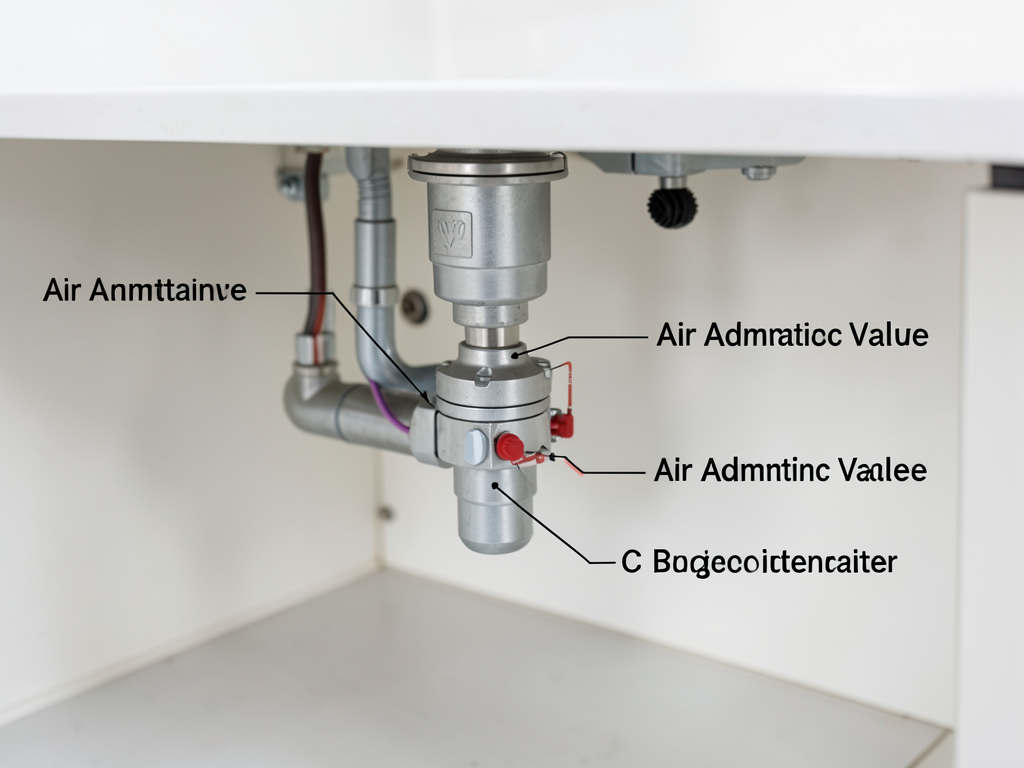
A close-up photo of an AAV installation beneath a kitchen island sink, showing the valve’s location and connection to the drain system.
NC Plumbing Code requirements for islands
The North Carolina Plumbing Code Section 913.1 mandates specific requirements for island sink installations. Drain pipes must maintain a minimum slope of 1/4 inch per foot, with 2-inch diameter pipes standard for kitchen sinks. The trap arm cannot exceed 24 inches in length, and the vent must connect within this distance. For homes in Mecklenburg County, additional local amendments may apply, requiring permits before any rough-in work begins. Mecklenburg County plumbing permits.
Foundation type significantly impacts installation complexity. Concrete slab homes, common throughout Charlotte’s newer developments, require cutting through the slab to install drain and vent lines. This process involves jackhammering, proper soil compaction, and careful concrete patching to prevent future settling. Crawl space homes offer slightly easier access but still require careful planning to route pipes without compromising floor joists or creating unsightly bulkheads.
The installation process: what to expect
Professional island sink installation follows a methodical process. First, the plumber evaluates your existing plumbing layout and determines the best route for new lines. This assessment includes checking for nearby vent stacks and main drains. Next comes the rough-in phase, where drain and vent pipes install before the concrete slab or floor finishes go down. Professional Toilet Repair and Installation Services in Matthews.
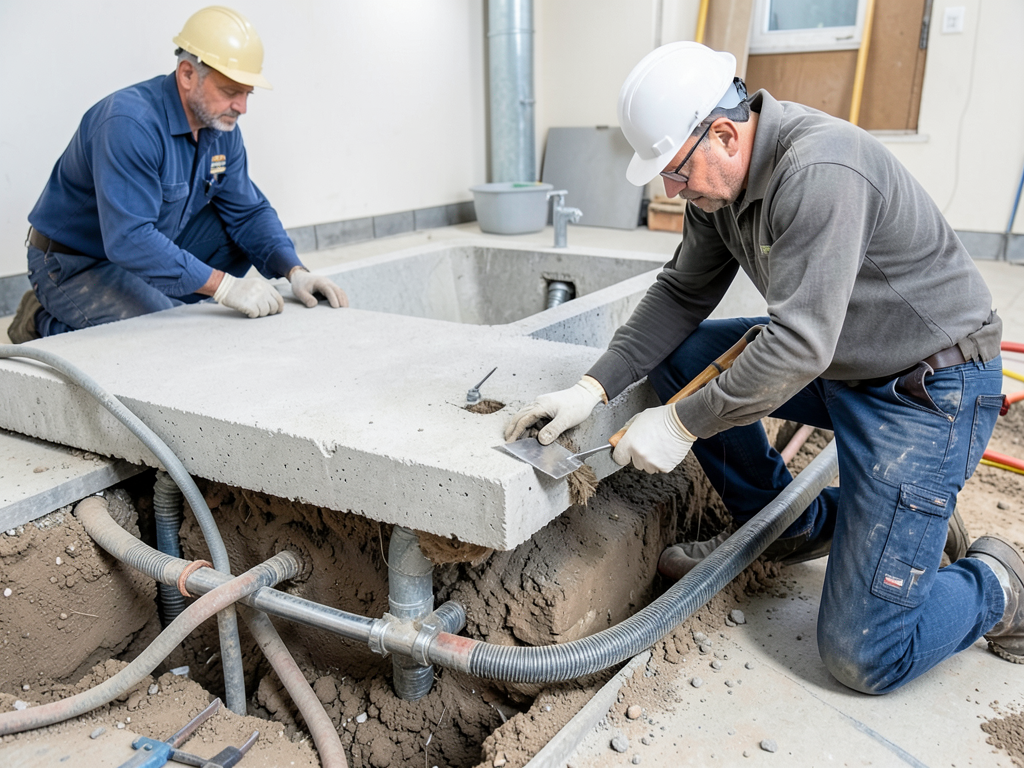
For slab foundations, this means cutting a trench through the concrete, installing Schedule 40 PVC pipes with proper slope, then backfilling with sand before pouring new concrete. The plumber then pressure-tests the system to check for leaks before covering it. Once the concrete cures, the finish plumber returns to connect the sink, faucet, and garbage disposal, ensuring all connections are watertight and properly supported. Signs You Need a Main Water Line Replacement in Pineville.
A photo sequence showing the progression of island sink installation, from trench cutting through concrete to final fixture connection.
Cost factors for island sink installation in Charlotte
Several factors influence the total cost of adding a sink to your kitchen island. Foundation type tops the list. Cutting through a concrete slab typically adds $800 to $1,500 to the project compared to homes with crawl spaces or basements. The distance from existing plumbing also matters significantly. If your island sits far from main drain lines, longer pipe runs increase both material and labor costs.
Vent configuration affects pricing too. AAV systems generally cost less upfront but may not meet all local code requirements for every installation. Loop vents require more extensive under-floor work but provide a more permanent solution. Material quality, from basic PVC to more durable options, and the complexity of integrating with existing fixtures like dishwashers also impact the final price. Most Charlotte homeowners should budget between $2,500 and $5,000 for a professional island sink installation, depending on these variables.
Frequently asked questions
Can I install a dishwasher in my kitchen island too?
Yes, dishwashers work well in kitchen islands and often share the same drain and vent lines as the sink. The key is proper sizing of the drain pipe to handle both fixtures simultaneously. A 2-inch drain typically suffices, but your plumber should verify this based on your specific layout and local codes.
Why does my island sink smell bad sometimes?
Odors usually indicate a problem with the P-trap or venting. If the trap dries out, sewer gases can enter the room. This often happens in guest houses or vacation properties where sinks see infrequent use. Poor venting can also cause water to siphon from the trap during drainage, breaking the seal. Both issues require professional diagnosis and repair. Gas Line Repair & Installation.
Do I need a permit for island sink installation?
Yes, Mecklenburg County requires permits for any new plumbing installation, including island sinks. The permit ensures the work meets North Carolina Plumbing Code standards and will be inspected by county officials. Your licensed plumber should handle the permitting process as part of the project.
How long does island sink installation take?
The timeline varies based on foundation type and project complexity. A straightforward installation in a crawl space might take 2-3 days. Concrete slab work typically requires 4-5 days, accounting for concrete curing time. Your plumber should provide a detailed schedule after the initial evaluation.
Can I use an AAV instead of a loop vent?
AAVs work in many island sink applications, but local codes have specific requirements. Some jurisdictions limit the number of AAVs per system or require them to be accessible for replacement. Your plumber should verify whether an AAV meets code for your specific installation or if a loop vent is necessary.
Ready to upgrade your kitchen island?
Island sink installation requires expertise in venting, drainage, and local building codes. Don’t risk improper installation that could lead to leaks, odors, or code violations. Call (980) 342-9933 today to schedule your consultation. Our licensed plumbers will evaluate your space, explain your options, and provide a detailed quote for professional installation that meets all Charlotte and Mecklenburg County requirements.
You may also find this helpful. Moving your laundry room to the second floor (What every Dilworth homeowner should know).
{
“@context”: “https://schema.org”,
“@type”: “BlogPosting”,
“headline”: “Why a kitchen island sink is more complicated than it looks”,
“description”: “Island sink plumbing requires special venting and code compliance. Learn why these modern kitchen features need expert installation in Charlotte homes.”,
“wordCount”: 1234,
“datePublished”: “2026-06-01T12:18:00.000Z”,
“dateModified”: “2026-06-01T12:18:00.000Z”,
“inLanguage”: “en-US”,
“mainEntityOfPage”: {
“@type”: “WebPage”,
“@id”: “https://keystoneplumbingcharlotte.com”
},
“publisher”: {
“@type”: “LocalBusiness”,
“name”: “Keystone Plumbing Charlotte”,
“url”: “https://keystoneplumbingcharlotte.com”
},
“author”: {
“@type”: “Organization”,
“name”: “Keystone Plumbing Charlotte”,
“url”: “https://keystoneplumbingcharlotte.com”
},
“image”: {
“@type”: “ImageObject”,
“url”: “https://keystoneplumbingcharlotte.com/wp-content/uploads/2026/03/why-a-kitchen-island-sink-is-more-complicated-than-1.png”
}
}
{
“@context”: “https://schema.org”,
“@type”: “Plumber”,
“name”: “Keystone Plumbing Charlotte”,
“url”: “https://keystoneplumbingcharlotte.com”,
“address”: {
“@type”: “PostalAddress”,
“addressLocality”: “Charlotte”
},
“areaServed”: {
“@type”: “City”,
“name”: “Charlotte”
}
}
{
“@context”: “https://schema.org”,
“@type”: “FAQPage”,
“mainEntity”: [
{
“@type”: “Question”,
“name”: “Can I install a dishwasher in my kitchen island too?”,
“acceptedAnswer”: {
“@type”: “Answer”,
“text”: “Yes, dishwashers work well in kitchen islands and often share the same drain and vent lines as the sink. The key is proper sizing of the drain pipe to handle both fixtures simultaneously. A 2-inch drain typically suffices, but your plumber should verify this based on your specific layout and local codes.”
}
},
{
“@type”: “Question”,
“name”: “Why does my island sink smell bad sometimes?”,
“acceptedAnswer”: {
“@type”: “Answer”,
“text”: “Odors usually indicate a problem with the P-trap or venting. If the trap dries out, sewer gases can enter the room. This often happens in guest houses or vacation properties where sinks see infrequent use. Poor venting can also cause water to siphon from the trap during drainage, breaking the seal. Both issues require professional diagnosis and repair. Gas Line Repair & Installation.”
}
},
{
“@type”: “Question”,
“name”: “Do I need a permit for island sink installation?”,
“acceptedAnswer”: {
“@type”: “Answer”,
“text”: “Yes, Mecklenburg County requires permits for any new plumbing installation, including island sinks. The permit ensures the work meets North Carolina Plumbing Code standards and will be inspected by county officials. Your licensed plumber should handle the permitting process as part of the project.”
}
},
{
“@type”: “Question”,
“name”: “How long does island sink installation take?”,
“acceptedAnswer”: {
“@type”: “Answer”,
“text”: “The timeline varies based on foundation type and project complexity. A straightforward installation in a crawl space might take 2-3 days. Concrete slab work typically requires 4-5 days, accounting for concrete curing time. Your plumber should provide a detailed schedule after the initial evaluation.”
}
},
{
“@type”: “Question”,
“name”: “Can I use an AAV instead of a loop vent?”,
“acceptedAnswer”: {
“@type”: “Answer”,
“text”: “AAVs work in many island sink applications, but local codes have specific requirements. Some jurisdictions limit the number of AAVs per system or require them to be accessible for replacement. Your plumber should verify whether an AAV meets code for your specific installation or if a loop vent is necessary.”
}
},
{
“@type”: “Question”,
“name”: “Ready to upgrade your kitchen island?”,
“acceptedAnswer”: {
“@type”: “Answer”,
“text”: “Island sink installation requires expertise in venting, drainage, and local building codes. Don’t risk improper installation that could lead to leaks, odors, or code violations. Call (980) 342-9933 today to schedule your consultation. Our licensed plumbers will evaluate your space, explain your options, and provide a detailed quote for professional installation that meets all Charlotte and Mecklenburg County requirements.”
}
}
]
}
{
“@context”: “https://schema.org”,
“@type”: “BreadcrumbList”,
“itemListElement”: [
{
“@type”: “ListItem”,
“position”: 1,
“name”: “Home”,
“item”: “https://keystoneplumbingcharlotte.com”
},
{
“@type”: “ListItem”,
“position”: 2,
“name”: “Blog”,
“item”: “https://keystoneplumbingcharlotte.com/blog”
},
{
“@type”: “ListItem”,
“position”: 3,
“name”: “Why a kitchen island sink is more complicated than it looks”
}
]
}
{
“@context”: “https://schema.org”,
“@type”: “Service”,
“serviceType”: “Plumbing”,
“provider”: {
“@type”: “LocalBusiness”,
“name”: “Keystone Plumbing Charlotte”,
“url”: “https://keystoneplumbingcharlotte.com”
},
“areaServed”: {
“@type”: “City”,
“name”: “Charlotte”
},
“description”: “Island sink plumbing requires special venting and code compliance. Learn why these modern kitchen features need expert installation in Charlotte homes.”
}