
Converting from Septic to City Sewer in Mint Hill (Everything You Need to Know)
Switching from a septic system to city sewer in Mint Hill involves a multi-step process that requires permits, excavation, and coordination with Charlotte Water. Homeowners in neighborhoods like Crown Colony and St. James Place often face aging septic systems that need replacement or are becoming eligible for municipal sewer expansion. This guide breaks down the entire conversion process, local permitting requirements, and cost factors specific to Mint Hill properties. Charlotte Water Capacity Fees Information.
Why Homeowners in Mint Hill are Switching to Public Sewer
Mint Hill residents are increasingly choosing to convert from septic to city sewer due to aging drain fields, soil saturation issues, and the convenience of municipal service. Many homes built before 2000 in areas like Idlewild and Patton Village still rely on septic systems that struggle with Charlotte’s heavy clay soil and seasonal rainfall patterns. Converting to public sewer eliminates the need for regular septic pumping, reduces the risk of groundwater contamination, and can increase property values by 3-13% according to Mecklenburg County property assessments. Mecklenburg County Septic Abandonment Requirements.
Charlotte Water has been expanding sewer capacity along major corridors like Matthews-Mint Hill Road and Lawyers Road, making sewer connection available to more Mint Hill neighborhoods each year. Properties within 100 feet of an existing sewer main may qualify for connection without major infrastructure upgrades. Is a Tankless Water Heater Worth It for Your Ballantyne Home?.
The Septic to Sewer Conversion Process: Step-by-Step
Converting from septic to city sewer requires careful planning and coordination with multiple agencies. The process typically takes 4-6 weeks from permit approval to final inspection, depending on Charlotte Water’s workload and soil conditions. Signs You Need a Main Water Line Replacement in Pineville.
- Initial Site Assessment
A licensed plumber evaluates your property’s slope, soil conditions, and proximity to existing sewer mains. Homes in low-lying areas near Clear Creek may require grinder pumps to overcome gravity flow limitations. Common Sewer Line Issues for Historic Dilworth Properties and How to Fix Them.
- Permit Application
Submit plumbing permits through Mecklenburg County’s ePermits system and Charlotte Water’s capacity reservation forms. The Mecklenburg County Health Department must approve septic abandonment plans before sewer installation begins. Plumbing Mint Hill.
- Septic Tank Decommissioning
The old septic tank must be pumped by a licensed septage hauler, then either crushed in place or completely removed according to NC Administrative Code 15A NCAC 18A.1900. This prevents future sinkholes and soil contamination.
- Sewer Lateral Installation
Trench excavation connects your home’s main sewer line to the municipal main. In established Mint Hill neighborhoods, this often means working around mature tree roots and existing utility lines.
- Charlotte Water Connection
Charlotte Water crews perform the final tap into the main line and install the water meter and backflow preventer. This step requires coordination with their scheduling department, which can take 2-3 weeks.
- Final Inspections
Mecklenburg County inspectors verify proper abandonment of the septic system and correct installation of the new sewer lateral. Charlotte Water performs a final pressure test before activating service.
- Site Restoration
Backfill trenches, grade soil, and restore landscaping. Most Mint Hill properties require 4-6 inches of topsoil and grass seed to fully recover from excavation.
1. Assessment and Permitting with Charlotte Water
The first step involves determining your property’s eligibility for sewer connection. Charlotte Water charges capacity fees based on your home’s size and expected wastewater volume. For a typical Mint Hill single-family home, these fees range from $2,500 to $4,500 depending on the service area and current rate schedules.
Mecklenburg County requires a separate plumbing permit for the sewer lateral installation. The application process includes submitting site plans showing the proposed connection point, existing utilities, and property boundaries. Processing times vary but typically take 5-10 business days.
2. Septic Tank Decommissioning and Cleaning
Proper septic tank abandonment is critical for environmental safety and code compliance. The tank must be completely emptied by a licensed septage disposal company, then either crushed with heavy equipment or removed entirely. NC Administrative Code 15A NCAC 18A.1900 requires that abandoned tanks be filled with sand or gravel to prevent collapse.
Properties in areas with high water tables, like those near the Seven Oaks Preserve, may require additional drainage measures to prevent groundwater infiltration into the abandoned tank cavity.
3. Installing the New Sewer Lateral Line
The sewer lateral connects your home’s main drain to the municipal sewer main. PVC pipe is the standard material, typically 4-inch diameter for residential service. The trench depth depends on frost line requirements and local utility conflicts but usually ranges from 3-6 feet deep.
In Mint Hill’s older neighborhoods, contractors often encounter clay soil that becomes extremely hard when dry but turns to mud during heavy rains. This soil behavior affects excavation timelines and may require dewatering pumps for proper pipe bedding.
4. Final Inspections and Yard Restoration
Once installation is complete, both Mecklenburg County and Charlotte Water conduct final inspections. The county verifies that the septic system has been properly abandoned and that all plumbing connections meet code requirements. Charlotte Water tests the new connection for leaks and proper flow.
Yard restoration typically involves removing excess soil, grading for proper drainage, and replanting grass or landscaping. Most homeowners in Mint Hill budget an additional $1,000-$2,000 for site restoration beyond the sewer installation costs.
Cost Factors for Sewer Conversion in Mecklenburg County
The total cost for converting from septic to city sewer in Mint Hill typically ranges from $8,000 to $15,000. Several factors influence the final price:
| Cost Component | Typical Range | Notes |
|---|---|---|
| Charlotte Water Tap Fees | $2,500 – $4,500 | Based on home size and service area |
| Septic Tank Removal | $1,500 – $3,000 | Crushing vs. complete removal affects cost |
| Sewer Lateral Installation | $3,000 – $5,000 | Distance to main and soil conditions impact price |
| Permits and Inspections | $500 – $1,000 | County and city fees combined |
| Site Restoration | $1,000 – $2,000 | Landscaping and grading costs |
Properties requiring grinder pumps due to elevation changes can add $3,000-$5,000 to the total cost. Homes in established neighborhoods with mature landscaping may face higher restoration costs due to the need to replace shrubs, trees, or hardscaping.
Mint Hill Neighborhoods We Frequently Serve
We’ve completed sewer conversions in numerous Mint Hill neighborhoods, each with unique challenges based on age, soil conditions, and proximity to existing infrastructure. Crown Colony homes built in the 1990s often have accessible crawl spaces that simplify lateral installation. St. James Place properties typically require minimal excavation due to their proximity to main roads where sewer lines were installed during initial development.
Older neighborhoods like Idlewild and Patton Village present more complex scenarios with established landscaping and potential utility conflicts. These conversions often require careful coordination with utility locators and may take longer due to the need to work around existing infrastructure.
Properties near the Clear Creek watershed may require additional permitting due to environmental regulations protecting the creek and its tributaries. Our team coordinates with both Charlotte Water and the Mecklenburg County Environmental Health Department to ensure all requirements are met.
Frequently Asked Questions About Sewer Conversions
How long does the entire conversion process take?
The complete process typically takes 4-6 weeks from permit application to final inspection. This timeline includes permit processing, septic tank removal, sewer installation, and final inspections. Weather delays and Charlotte Water’s scheduling can extend this timeframe.
Can I keep my septic system as a backup?
No. Mecklenburg County requires complete abandonment of septic systems once connected to municipal sewer. This prevents confusion about which system is active and eliminates the risk of sewage backup into the abandoned tank.. Read more about Maintaining Your Sewage Ejector Pump to Avoid Basement Disasters in Piper Glen.
Will my property value increase after conversion?
Yes. Properties with public sewer typically see value increases of 3-13% compared to similar homes on septic. Buyers often perceive public sewer as more reliable and requiring less maintenance than septic systems.
Do I need to be home during the installation?
You don’t need to be present for the entire process, but you should be available for key steps like the initial assessment, final inspection, and when water service is restored. Our team coordinates all scheduling with you in advance.
What happens if we hit rock during excavation?
If solid rock is encountered during trenching, additional equipment like rock saws or hydraulic hammers may be needed. This can increase costs by $1,000-$3,000 depending on the extent of rock encountered. We assess soil conditions during the initial site visit to identify potential rock issues.

A technician using ground-penetrating radar to locate existing utilities before excavation begins, ensuring safe trenching near buried lines.
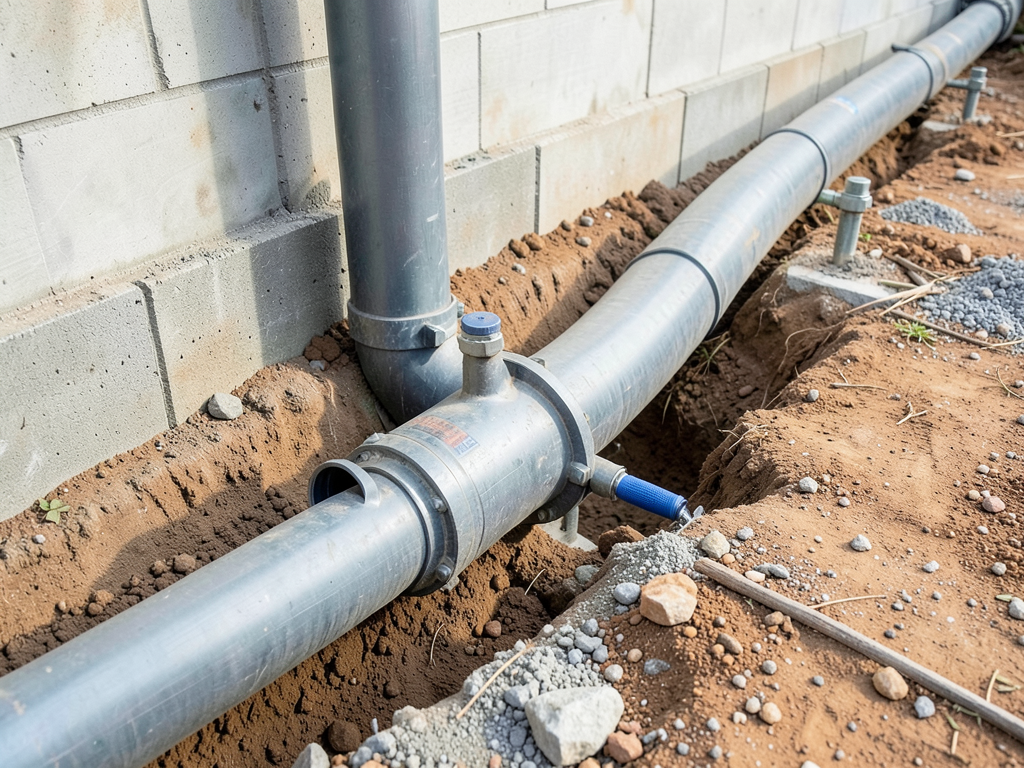
A completed sewer lateral installation showing proper pipe bedding, cleanouts, and connection to the municipal main line with all required fittings.
A before-and-after comparison of a Mint Hill yard showing excavation trenches and the final restored landscape with new sod and grading.
Ready to Convert Your Mint Hill Home to City Sewer?
Converting from septic to city sewer is a significant investment that provides long-term benefits for your Mint Hill home. Our team handles everything from permit applications to final inspections, ensuring a smooth transition to reliable municipal sewer service.
Call (980) 342-9933 today to schedule your free site assessment and learn about current Charlotte Water connection opportunities in your neighborhood. Don’t wait until your septic system fails – plan your conversion now and enjoy worry-free sewer service for years to come.
Pick up the phone and call (980) 342-9933 before the next heavy rain overwhelms your aging septic drain field. Our Mint Hill sewer conversion specialists are ready to help you make the switch to reliable city sewer service.
{
“@context”: “https://schema.org”,
“@type”: “BlogPosting”,
“headline”: “Converting from Septic to City Sewer in Mint Hill (Everything You Need to Know)”,
“description”: “Learn the complete septic to sewer conversion process in Mint Hill. Get local permit requirements, Charlotte Water fees, and expert installation timelines.”,
“wordCount”: 1595,
“datePublished”: “2026-03-09T07:31:00.000Z”,
“dateModified”: “2026-03-09T07:31:00.000Z”,
“inLanguage”: “en-US”,
“mainEntityOfPage”: {
“@type”: “WebPage”,
“@id”: “https://keystoneplumbingcharlotte.com”
},
“publisher”: {
“@type”: “LocalBusiness”,
“name”: “Keystone Plumbing Charlotte”,
“url”: “https://keystoneplumbingcharlotte.com”
},
“author”: {
“@type”: “Organization”,
“name”: “Keystone Plumbing Charlotte”,
“url”: “https://keystoneplumbingcharlotte.com”
},
“image”: {
“@type”: “ImageObject”,
“url”: “https://keystoneplumbingcharlotte.com/wp-content/uploads/2026/03/converting-from-septic-to-city-sewer-in-mint-hill-1.png”
}
}
{
“@context”: “https://schema.org”,
“@type”: “Plumber”,
“name”: “Keystone Plumbing Charlotte”,
“url”: “https://keystoneplumbingcharlotte.com”,
“address”: {
“@type”: “PostalAddress”,
“addressLocality”: “Charlotte”
},
“areaServed”: {
“@type”: “City”,
“name”: “Charlotte”
}
}
{
“@context”: “https://schema.org”,
“@type”: “FAQPage”,
“mainEntity”: [
{
“@type”: “Question”,
“name”: “How long does the entire conversion process take?”,
“acceptedAnswer”: {
“@type”: “Answer”,
“text”: “The complete process typically takes 4-6 weeks from permit application to final inspection. This timeline includes permit processing, septic tank removal, sewer installation, and final inspections. Weather delays and Charlotte Water’s scheduling can extend this timeframe.”
}
},
{
“@type”: “Question”,
“name”: “Can I keep my septic system as a backup?”,
“acceptedAnswer”: {
“@type”: “Answer”,
“text”: “No. Mecklenburg County requires complete abandonment of septic systems once connected to municipal sewer. This prevents confusion about which system is active and eliminates the risk of sewage backup into the abandoned tank.”
}
},
{
“@type”: “Question”,
“name”: “Will my property value increase after conversion?”,
“acceptedAnswer”: {
“@type”: “Answer”,
“text”: “Yes. Properties with public sewer typically see value increases of 3-13% compared to similar homes on septic. Buyers often perceive public sewer as more reliable and requiring less maintenance than septic systems.”
}
},
{
“@type”: “Question”,
“name”: “Do I need to be home during the installation?”,
“acceptedAnswer”: {
“@type”: “Answer”,
“text”: “You don’t need to be present for the entire process, but you should be available for key steps like the initial assessment, final inspection, and when water service is restored. Our team coordinates all scheduling with you in advance.”
}
},
{
“@type”: “Question”,
“name”: “What happens if we hit rock during excavation?”,
“acceptedAnswer”: {
“@type”: “Answer”,
“text”: “If solid rock is encountered during trenching, additional equipment like rock saws or hydraulic hammers may be needed. This can increase costs by $1,000-$3,000 depending on the extent of rock encountered. We assess soil conditions during the initial site visit to identify potential rock issues.”
}
},
{
“@type”: “Question”,
“name”: “Ready to Convert Your Mint Hill Home to City Sewer?”,
“acceptedAnswer”: {
“@type”: “Answer”,
“text”: “Converting from septic to city sewer is a significant investment that provides long-term benefits for your Mint Hill home. Our team handles everything from permit applications to final inspections, ensuring a smooth transition to reliable municipal sewer service.”
}
}
]
}
{
“@context”: “https://schema.org”,
“@type”: “HowTo”,
“name”: “Septic to Sewer Conversion Process”,
“step”: [
{
“@type”: “HowToStep”,
“position”: 1,
“name”: “Initial Site Assessment”,
“text”: “A licensed plumber evaluates your property’s slope, soil conditions, and proximity to existing sewer mains. Homes in low-lying areas near Clear Creek may require grinder pumps to overcome gravity flow limitations. Common Sewer Line Issues for Historic Dilworth Properties and How to Fix Them.”
},
{
“@type”: “HowToStep”,
“position”: 2,
“name”: “Permit Application”,
“text”: “Submit plumbing permits through Mecklenburg County’s ePermits system and Charlotte Water’s capacity reservation forms. The Mecklenburg County Health Department must approve septic abandonment plans before sewer installation begins. Plumbing Mint Hill.”
},
{
“@type”: “HowToStep”,
“position”: 3,
“name”: “Septic Tank Decommissioning”,
“text”: “The old septic tank must be pumped by a licensed septage hauler, then either crushed in place or completely removed according to NC Administrative Code 15A NCAC 18A.1900. This prevents future sinkholes and soil contamination.”
},
{
“@type”: “HowToStep”,
“position”: 4,
“name”: “Sewer Lateral Installation”,
“text”: “Trench excavation connects your home’s main sewer line to the municipal main. In established Mint Hill neighborhoods, this often means working around mature tree roots and existing utility lines.”
},
{
“@type”: “HowToStep”,
“position”: 5,
“name”: “Charlotte Water Connection”,
“text”: “Charlotte Water crews perform the final tap into the main line and install the water meter and backflow preventer. This step requires coordination with their scheduling department, which can take 2-3 weeks.”
},
{
“@type”: “HowToStep”,
“position”: 6,
“name”: “Final Inspections”,
“text”: “Mecklenburg County inspectors verify proper abandonment of the septic system and correct installation of the new sewer lateral. Charlotte Water performs a final pressure test before activating service.”
},
{
“@type”: “HowToStep”,
“position”: 7,
“name”: “Site Restoration”,
“text”: “Backfill trenches, grade soil, and restore landscaping. Most Mint Hill properties require 4-6 inches of topsoil and grass seed to fully recover from excavation.”
}
],
“image”: “https://keystoneplumbingcharlotte.com/wp-content/uploads/2026/03/converting-from-septic-to-city-sewer-in-mint-hill-1.png”
}
{
“@context”: “https://schema.org”,
“@type”: “BreadcrumbList”,
“itemListElement”: [
{
“@type”: “ListItem”,
“position”: 1,
“name”: “Home”,
“item”: “https://keystoneplumbingcharlotte.com”
},
{
“@type”: “ListItem”,
“position”: 2,
“name”: “Blog”,
“item”: “https://keystoneplumbingcharlotte.com/blog”
},
{
“@type”: “ListItem”,
“position”: 3,
“name”: “Converting from Septic to City Sewer in Mint Hill (Everything You Need to Know)”
}
]
}
{
“@context”: “https://schema.org”,
“@type”: “Service”,
“serviceType”: “Plumbing”,
“provider”: {
“@type”: “LocalBusiness”,
“name”: “Keystone Plumbing Charlotte”,
“url”: “https://keystoneplumbingcharlotte.com”
},
“areaServed”: {
“@type”: “City”,
“name”: “Charlotte”
},
“description”: “Learn the complete septic to sewer conversion process in Mint Hill. Get local permit requirements, Charlotte Water fees, and expert installation timelines.”
}