
Should You Install a French Drain or a Sump Pump in Your Charlotte Basement?
Charlotte’s heavy spring rains and thick red clay soil create a perfect storm for basement flooding. You stand in your damp basement wondering whether a French drain or sump pump will finally stop the water. The answer depends on your specific problem: surface runoff or groundwater intrusion. Is a Tankless Water Heater Worth It for Your Ballantyne Home?.
French drains work best for surface water that pools around your foundation after storms. They use gravity to move water away through a perforated pipe buried in gravel. Sump pumps handle groundwater that seeps up from below, using a mechanical pump to eject water when it reaches a certain level. Signs You Need a Main Water Line Replacement in Pineville.
Charlotte’s clay soil complicates both systems. Clay holds water like a sponge and drains slowly, causing water to back up quickly during heavy downpours. The Piedmont region’s high water table also means many homes need more than one solution.
Before deciding, you need to understand what’s happening under your home. Is water entering through cracks in your basement walls or pooling in your yard after rain? The source of the water determines the right fix.. Read more about Moving Plumbing for a Basement Bathroom Finish in Your Harrisburg Home.
What is a French Drain? (The Exterior Solution)
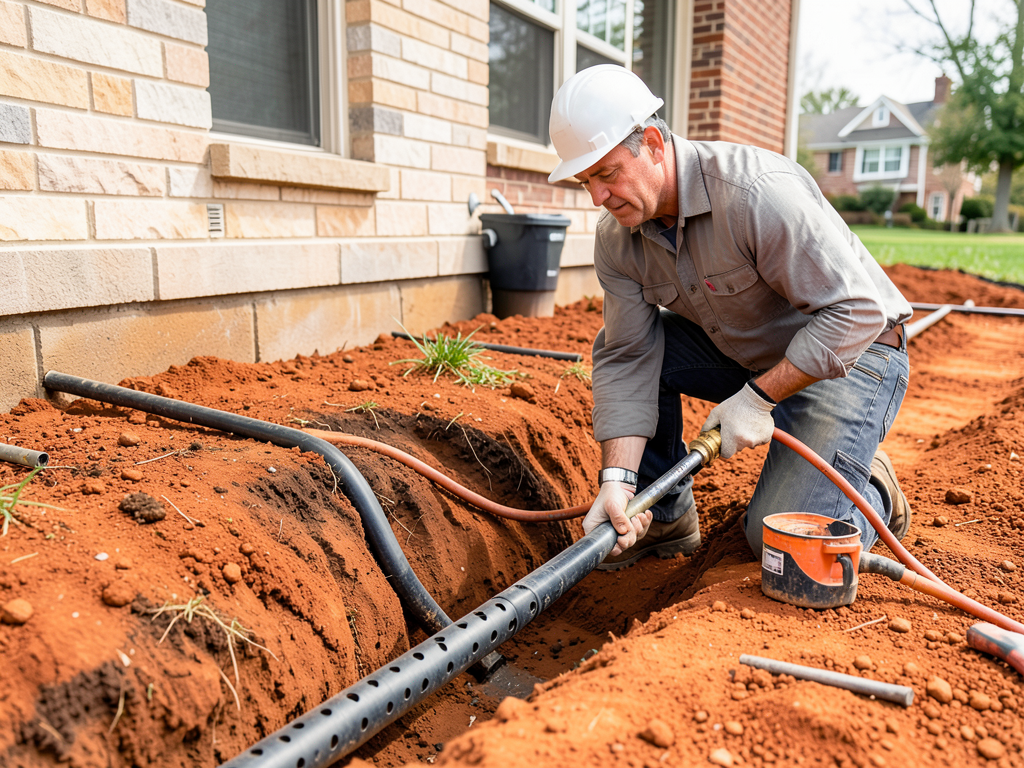
A French drain consists of a trench filled with gravel and a perforated pipe that redirects surface water away from your home. The pipe has small holes along its length that collect water as it seeps through the gravel.
In Charlotte, French drains typically run along the foundation perimeter or in problem areas of your yard where water collects. The system works through gravity – water flows downhill through the pipe to a safe discharge point like a storm drain or dry well.
The installation process involves digging a trench at least 18 inches deep and 12 inches wide. You line the trench with landscape fabric to prevent soil from clogging the system. Then you add a layer of gravel, place the perforated pipe with holes facing down, and cover it with more gravel before replacing the soil.
Charlotte’s red clay presents unique challenges. The dense clay can collapse trench walls during excavation and may require wider trenches or different installation techniques. You also need to ensure proper slope – at least 1% grade – to move water through the heavy clay soil.
French drains excel at handling surface runoff from roof downspouts, driveway runoff, and yard drainage. They prevent water from saturating the soil around your foundation, which reduces hydrostatic pressure on basement walls.
However, French drains struggle when the water table rises above the pipe level. They cannot pump water out – they only move water that enters the pipe through gravity.
Common French Drain Issues in Charlotte:
- Clay soil clogging the pipe perforations
- Tree roots invading the system
- Improper slope causing water backup
- Sediment buildup reducing flow capacity
What is a Sump Pump? (The Interior Solution)
A sump pump sits in a pit or basin below your basement floor. When groundwater rises to a certain level, the pump activates automatically and ejects water through a discharge pipe to the outside.
The system includes a sump basin that collects water, a pump (submersible or pedestal), a float switch that triggers the pump, and a discharge line that carries water away from your foundation.
Charlotte homes often need sump pumps due to the region’s high water table and frequent heavy rains. The system works even when power fails if you install a battery backup pump.
Installation requires cutting a hole in your basement floor, digging down to create the sump pit, and installing the basin. You connect the discharge pipe to exit your home through the foundation wall or floor, then route it away from your foundation.
The pump activates when water fills the basin to a specific level. A float switch rises with the water and triggers the pump motor. The pump ejects water through the discharge pipe, usually to a storm drain or far enough from your foundation to prevent recirculation.
Sump pumps handle groundwater intrusion that French drains cannot address. They work when the water table is above your basement floor or when hydrostatic pressure pushes water through foundation cracks.
Sump Pump Considerations for Charlotte:
- Battery backup essential for hurricane season power outages
- Check valve prevents water from flowing back into the pit
- Proper discharge location prevents foundation saturation
- Regular testing ensures reliability during storms
Comparison Table: French Drain vs Sump Pump
| Feature | French Drain | Sump Pump |
|---|---|---|
| Water Source | Surface runoff | Groundwater |
| Installation Location | Exterior foundation or yard | Interior basement pit |
| Power Required | No | Yes (battery backup recommended) |
| Best For | Preventing foundation saturation | Handling high water table |
| Maintenance | Occasional flushing, root clearing | Annual testing, battery replacement |
| Charlotte Advantage | Handles heavy clay runoff | Manages high water table |
Why Charlotte’s Soil and Weather Matter
Charlotte sits in North Carolina’s Piedmont region where the soil consists primarily of Cecil soil series – a red clay that expands when wet and contracts when dry. This clay holds water like a sponge and drains very slowly. North Carolina Hurricane Preparedness Guide.
During Charlotte’s heavy spring rains and summer thunderstorms, clay soil becomes saturated quickly. Water has nowhere to go, creating hydrostatic pressure against foundation walls. This pressure forces water through cracks and joints into basements.
The region receives approximately 43 inches of rain annually, with most falling between March and September. Charlotte also experiences occasional tropical systems from the Atlantic that dump several inches of rain in hours.
Mecklenburg County storm water regulations require proper discharge of drainage systems. French drain outlets must discharge at least 10 feet from foundations and cannot direct water onto neighboring properties without permission.
According to the North Carolina Plumbing Code Section 13-4.2, sump pump discharge must be directed away from foundations and cannot connect to sanitary sewer systems. Violations can result in fines and required system modifications. Common Sewer Line Issues for Historic Dilworth Properties and How to Fix Them.
Charlotte’s freeze-thaw cycles also affect drainage systems. While not as severe as northern climates, temperatures occasionally drop below freezing. Any drainage system must be installed below the frost line – typically 12 inches in the Charlotte area.
The combination of clay soil, high rainfall, and occasional freezing temperatures means Charlotte homeowners need drainage systems designed specifically for local conditions, not generic solutions.
The Hybrid Approach: When You Need Both
Many Charlotte homes benefit from both systems working together. A French drain around the foundation perimeter collects surface water and directs it to a sump pit. The sump pump then ejects the collected water away from your home.
This hybrid system provides comprehensive protection. The French drain handles surface runoff that would otherwise saturate the soil around your foundation. The sump pump manages groundwater that rises above the French drain level.
Installation involves creating a French drain system around your foundation that feeds into a sump pit. The pit collects water from both the French drain and any groundwater that enters through the basement floor.
The sump pump activates when water in the pit reaches a certain level, regardless of whether the water came from the French drain or direct groundwater infiltration.
This approach works particularly well for Charlotte homes with basements that experience both surface and groundwater issues. The French drain reduces the load on the sump pump by handling surface water, while the pump provides backup protection when groundwater levels are high.
Hybrid systems also include features like:
- Multiple inlet pipes connecting the French drain to the sump pit
- High-water alarms that alert you to pump failure
- Backup power systems for storm-related outages
- Water alarm systems for early leak detection
Cost Guide: Charlotte, NC Averages
French drain installation in Charlotte typically ranges from $25 to $35 per linear foot for exterior systems. A complete perimeter system around an average home might cost $3,000 to $5,000 depending on soil conditions and property layout.
Sump pump installation costs vary based on the system type. A basic submersible pump with basin installation runs $1,200 to $1,800. Adding battery backup increases costs by $400 to $600.
Hybrid systems combining both approaches cost more – typically $4,000 to $7,000 for complete installation. However, they provide the most comprehensive protection against Charlotte’s water challenges.
Factors affecting Charlotte pricing include:
- Clay soil excavation difficulty
- Property slope and accessibility
- Foundation depth and basement construction
- Local permit requirements and inspections
Mecklenburg County requires permits for both French drain and sump pump installations that involve excavation or structural modifications. Permit fees range from $75 to $200 depending on project scope.
Professional installation ensures compliance with local codes and proper system design for Charlotte’s specific conditions. DIY installations often fail due to inadequate understanding of local soil and weather patterns. Professional Toilet Repair and Installation Services in Matthews.
Call (980) 342-9933 today to schedule your inspection. Our Charlotte drainage experts will evaluate your specific situation and recommend the right solution for your home.
Frequently Asked Questions
Which system is better for a finished basement?
Sump pumps work better for finished basements since they operate inside without affecting your landscaping. French drains require exterior excavation that can damage existing landscaping and hardscaping.
How long do these systems last in Charlotte?
Properly installed French drains last 30-40 years with occasional maintenance. Sump pumps typically need replacement every 7-10 years, though the basin and discharge pipes last much longer.
Can I install these systems myself?
While DIY installation is possible, Charlotte’s clay soil and local building codes make professional installation advisable. Improper installation can lead to system failure during critical storms.
What maintenance do these systems require?
French drains need annual flushing to prevent sediment buildup. Sump pumps require testing every three months and battery replacement every 3-5 years. Both systems benefit from professional inspection before hurricane season.
Will insurance cover these installations?
Standard homeowners insurance typically doesn’t cover preventive drainage installations. However, if you’ve had previous water damage claims, some insurers may offer premium discounts for these systems.
Ready to Solve Your Basement Water Problem?
Don’t wait for the next Charlotte downpour to find out if your drainage system works. Pick up the phone and call (980) 342-9933 before the next storm hits. Our local experts understand Charlotte’s unique soil and weather challenges and can recommend the right solution for your home.
We serve homeowners throughout Charlotte, Matthews, Mint Hill, and surrounding areas. Our team will evaluate your specific situation, explain your options clearly, and provide upfront pricing with no surprises.
Call (980) 342-9933 now to schedule your basement drainage evaluation. Stop water damage before it starts. For more information, visit EPA NPDES Storm Water Regulations.
You may also find this helpful. The Truth About Septic Tank Additives for Homeowners in Clover and York.
You may also find this helpful. Signs Your Cast Iron Vent Stacks Are Leaking Inside Your Midwood Walls.
{
“@context”: “https://schema.org”,
“@type”: “BlogPosting”,
“headline”: “Should You Install a French Drain or a Sump Pump in Your Charlotte Basement?”,
“description”: “Wet basement in Charlotte? Learn how NC red clay soil and heavy rainfall affect French drains vs sump pumps. Find your best solution now.”,
“wordCount”: 1780,
“datePublished”: “2026-04-28T11:18:00.000Z”,
“dateModified”: “2026-04-28T11:18:00.000Z”,
“inLanguage”: “en-US”,
“mainEntityOfPage”: {
“@type”: “WebPage”,
“@id”: “https://keystoneplumbingcharlotte.com”
},
“publisher”: {
“@type”: “LocalBusiness”,
“name”: “Keystone Plumbing Charlotte”,
“url”: “https://keystoneplumbingcharlotte.com”
},
“author”: {
“@type”: “Organization”,
“name”: “Keystone Plumbing Charlotte”,
“url”: “https://keystoneplumbingcharlotte.com”
},
“image”: {
“@type”: “ImageObject”,
“url”: “https://keystoneplumbingcharlotte.com/wp-content/uploads/2026/03/should-you-install-a-french-drain-or-a-sump-pump-i-1.png”
}
}
{
“@context”: “https://schema.org”,
“@type”: “Plumber”,
“name”: “Keystone Plumbing Charlotte”,
“url”: “https://keystoneplumbingcharlotte.com”,
“address”: {
“@type”: “PostalAddress”,
“addressLocality”: “Charlotte”
},
“areaServed”: {
“@type”: “City”,
“name”: “Charlotte”
}
}
{
“@context”: “https://schema.org”,
“@type”: “FAQPage”,
“mainEntity”: [
{
“@type”: “Question”,
“name”: “Which system is better for a finished basement?”,
“acceptedAnswer”: {
“@type”: “Answer”,
“text”: “Sump pumps work better for finished basements since they operate inside without affecting your landscaping. French drains require exterior excavation that can damage existing landscaping and hardscaping.”
}
},
{
“@type”: “Question”,
“name”: “How long do these systems last in Charlotte?”,
“acceptedAnswer”: {
“@type”: “Answer”,
“text”: “Properly installed French drains last 30-40 years with occasional maintenance. Sump pumps typically need replacement every 7-10 years, though the basin and discharge pipes last much longer.”
}
},
{
“@type”: “Question”,
“name”: “Can I install these systems myself?”,
“acceptedAnswer”: {
“@type”: “Answer”,
“text”: “While DIY installation is possible, Charlotte’s clay soil and local building codes make professional installation advisable. Improper installation can lead to system failure during critical storms.”
}
},
{
“@type”: “Question”,
“name”: “What maintenance do these systems require?”,
“acceptedAnswer”: {
“@type”: “Answer”,
“text”: “French drains need annual flushing to prevent sediment buildup. Sump pumps require testing every three months and battery replacement every 3-5 years. Both systems benefit from professional inspection before hurricane season.”
}
},
{
“@type”: “Question”,
“name”: “Will insurance cover these installations?”,
“acceptedAnswer”: {
“@type”: “Answer”,
“text”: “Standard homeowners insurance typically doesn’t cover preventive drainage installations. However, if you’ve had previous water damage claims, some insurers may offer premium discounts for these systems.”
}
},
{
“@type”: “Question”,
“name”: “Ready to Solve Your Basement Water Problem?”,
“acceptedAnswer”: {
“@type”: “Answer”,
“text”: “Don’t wait for the next Charlotte downpour to find out if your drainage system works. Pick up the phone and call (980) 342-9933 before the next storm hits. Our local experts understand Charlotte’s unique soil and weather challenges and can recommend the right solution for your home.”
}
}
]
}
{
“@context”: “https://schema.org”,
“@type”: “BreadcrumbList”,
“itemListElement”: [
{
“@type”: “ListItem”,
“position”: 1,
“name”: “Home”,
“item”: “https://keystoneplumbingcharlotte.com”
},
{
“@type”: “ListItem”,
“position”: 2,
“name”: “Blog”,
“item”: “https://keystoneplumbingcharlotte.com/blog”
},
{
“@type”: “ListItem”,
“position”: 3,
“name”: “Should You Install a French Drain or a Sump Pump in Your Charlotte Basement?”
}
]
}
{
“@context”: “https://schema.org”,
“@type”: “Service”,
“serviceType”: “Plumbing”,
“provider”: {
“@type”: “LocalBusiness”,
“name”: “Keystone Plumbing Charlotte”,
“url”: “https://keystoneplumbingcharlotte.com”
},
“areaServed”: {
“@type”: “City”,
“name”: “Charlotte”
},
“description”: “Wet basement in Charlotte? Learn how NC red clay soil and heavy rainfall affect French drains vs sump pumps. Find your best solution now.”
}